Custom Shopify App Case Study: Carousel Repair
The warranty is bought with the piece, the repair request is filed from order history, and the work lands in the service centre’s existing system.
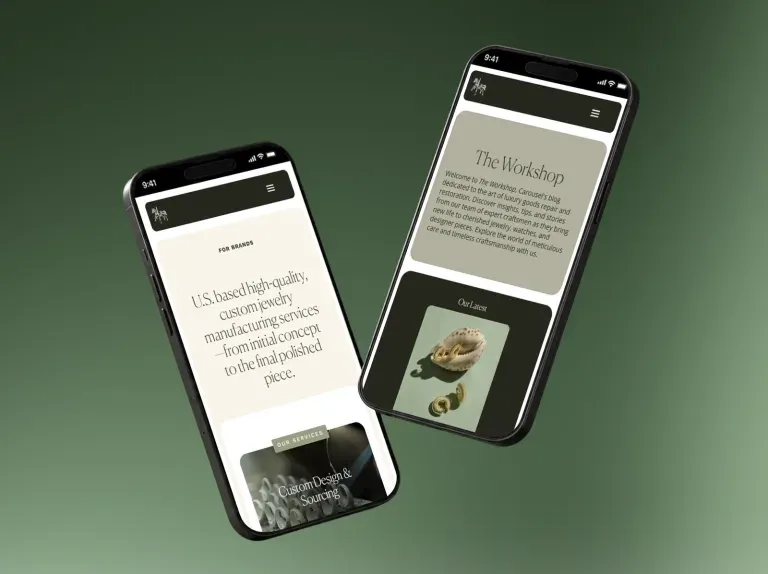
This case study covers a Shopify app through which jewelry brands sell warranties, determine coverage at the level of an individual piece, accept repair requests and pass them into the service infrastructure of Carousel Repair. Three phases from March 2025 to February 2026. The app closed the warranty lifecycle end to end: from purchase and coverage determination through the customer’s request, the repair, and fulfillment of the obligation.
The project was delivered by a cross-functional team that included a project manager, business analyst, solution architect, two Shopify and full-stack developers, a frontend developer, QA engineer, and UI/UX designer.
reduction in average repair request handling time
Carousel Repair is a family business with more than 75 years of experience in luxury jewelry aftercare, covering repair, restoration, manufacturing, logistics, and white-label customer service. Jewelry brands outsource their entire aftercare operation to Carousel.
The physical infrastructure and digital tooling were already in place, including an admin system for inventory and repairs, work status tracking, and a substantial part of the API. The project was not about rebuilding this repair infrastructure.
The challenge was connecting that existing system to the point where the customer actually made the purchase. Carousel’s clients sell through Shopify, where order, product, and customer data already live.
To make aftercare a natural part of the customer journey, the repair process needed to start directly within the Shopify ecosystem and communicate with the system already running behind it. The result was a connection between the storefront and Carousel’s existing repair infrastructure, without replacing the operational system that was already in use.
Carousel Repair LLC
Jewelry aftercare, repair, restoration, manufacturing, logistics
Ohio, United States
Shopify
Three phases, March 2025 to February 2026
The company has operated for over 75 years and combines repair, equipment, restoration, manufacturing and logistics with white label customer service. Jewelry brands hand their aftercare to Carousel, which performs it either under its own name or under the brand’s.
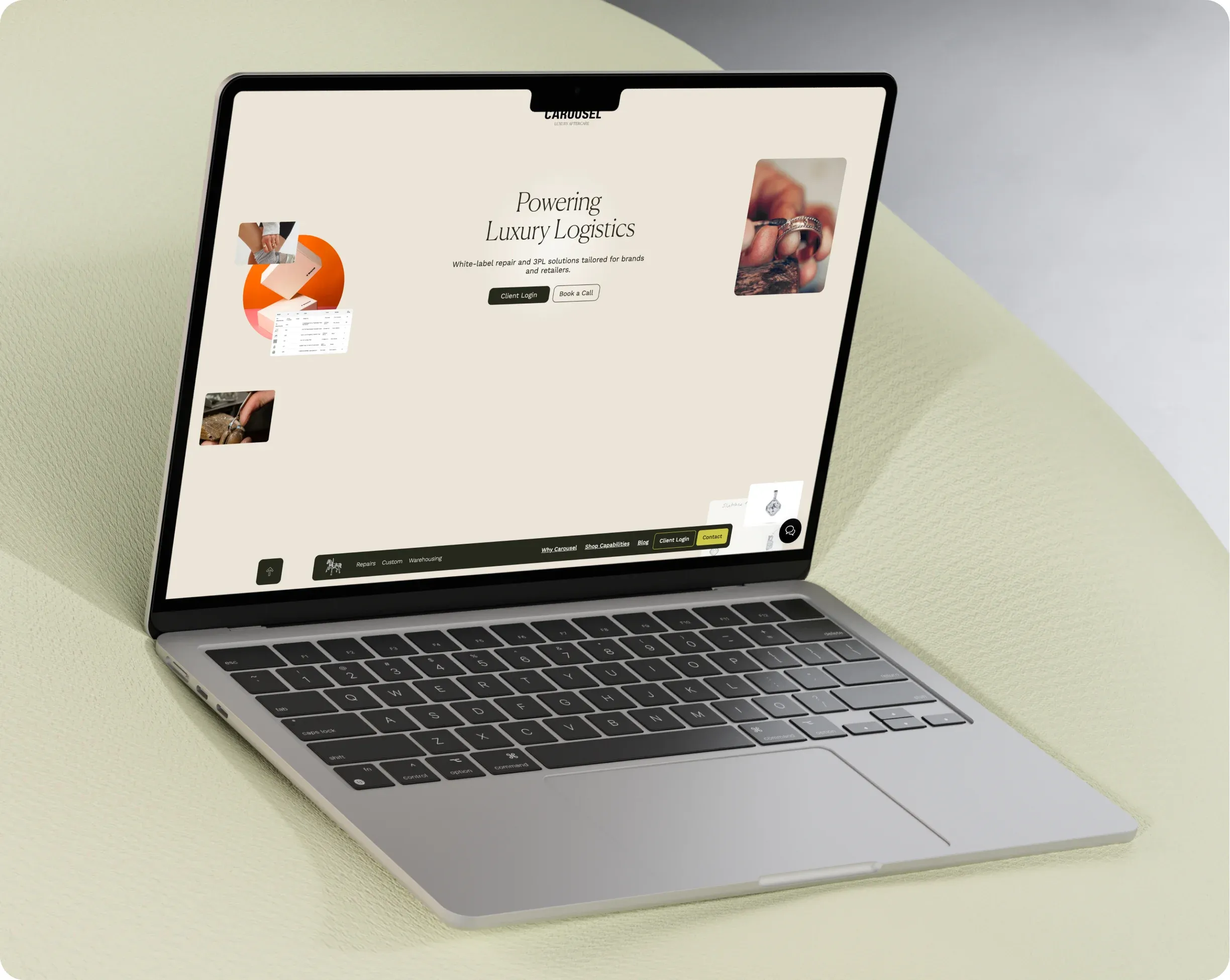
They sell pieces where warranty and later repair matter, and want to offer coverage at the moment of purchase.
They see which pieces carry a warranty and whether it is still valid, and file requests from the same place.
They receive requests with complete data attached and take them into work without manual entry.
The warranty belongs to the piece, not the order
The original logic tied coverage to the order. But a single order holds several items with different statuses: one with purchased coverage, one without, one covered by default. Coverage logic had to move to the line item level while preserving order data for later request handling.
Storefronts differ, and all of them need support
Shopify hosts old and new customer account architectures, old and new themes, and headless storefronts whose interface the merchant builds. No single technical approach covers all of them.
Extend the existing system rather than replace it
Repairs happen on Carousel’s side, in infrastructure that already works. The app had to become an entry point, not a second control centre for repairs.
White label in both directions
The solution had to run under Carousel’s brand and under the brand of the individual store using Carousel’s services.
External fulfillment as its own track
Carousel ships US orders for brands with no independent presence in the American market. That scenario needed a module of its own.
The customer journey cannot break
Sending the buyer to an external system meant re-entering data and losing the order context.
We rejected a separate Carousel Repair portal
The buyer would purchase a piece from a brand on Shopify, then move to an outside system to register the warranty, file a request and track its status. The reason for rejecting it: the journey breaks, data gets entered twice, and the buyer bounces between two systems. Separately, it undermines white label, since the portal belongs to Carousel rather than to the brand.
We rejected embedded iframe forms
This is how the client worked before the project. The reason for rejecting it: a form does not reach the required depth of integration. Order and customer data must move from Shopify into Carousel and back automatically, and an embedded form cannot do that.
We chose a native Shopify app
It uses data Shopify already holds, determines the request context on its own and removes manual entry. Shopify becomes the merchant-facing and customer-facing entry point, while Carousel’s system stays the operational layer where repairs and fulfillment happen.
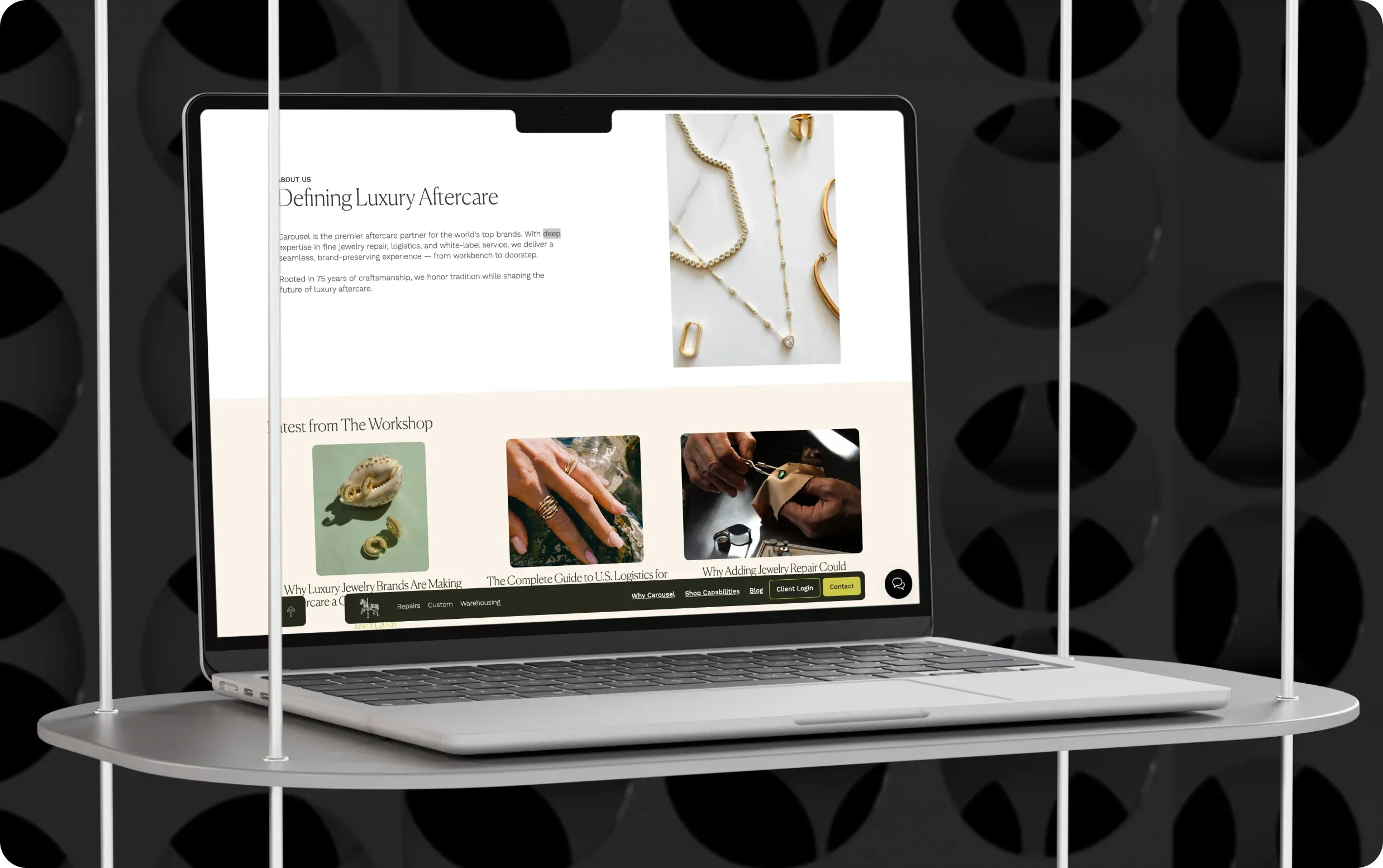
A request that arrives at the service centre already complete
The buyer presses one button next to their order. Nothing after that requires typing. The app gathers everything Shopify already holds, validates the warranty for that specific piece, assembles the request and passes it straight into Carousel’s system.
On the service side a finished record appears: the original order, the piece, coverage status, customer contacts and address. The request can be taken into work immediately, or the customer contacted if something needs clarifying. Building this took joint work with Carousel’s own developers and API changes on both sides.
The app does not perform repairs and does not replace the service centre’s system. It moves the entry point into the repair process as close to the purchase as it can get, and leaves everything else where it already worked.
How our team worked
Warranty at purchase, in two modes
The merchant enables automatic warranty, added to every piece sold, or offers extended coverage as a paid upsell on any product.
Coverage at the level of the individual piece
The logic moved to line items. Within one order the app distinguishes items with purchased coverage, items without it, and items covered by default, while keeping order data available for request handling.
Requests filed from order history
An action for filing a request appears next to the order in the customer account. The buyer sees the pieces in that order, the marker showing active coverage, and files from there. If the warranty has expired or never existed, non-warranty repair requests are supported.
Auto-fill from Shopify data
The request form pulls any data available in Shopify: order ID, name, date, line items, the specific products, customer contact details, address and value.
One API layer and broad compatibility
Native Shopify integrations are used where supported, with a manual form embed as fallback for configurations where they are not. The backend is unified behind a single API layer that serves every integration type.
Merchant analytics
A reporting layer shows warranties sold, the split between automatic and paid extended coverage, active warranties, repair requests filed with a warranty and non-warranty breakdown, the most frequently serviced products, and the conversion rate on warranty upsell.
Configurable appearance
Merchants adjust fonts, sizes, copy, colors and buttons on warranty forms and widgets so they read as part of their own store.
External fulfillment module
The third phase added a separate track: orders from brand stores go out through Carousel.
What changed after the build
Beyond the numbers:
The warranty lifecycle closed inside Shopify
Buying the piece, buying the coverage, checking validity, filing the request, the repair and fulfillment of the obligation run as one chain with no external systems in the middle.
Warranty became a property of the piece
A five-item order no longer forces one coverage decision across all five.
Merchants operate under their own brand
Forms and widgets are styled to match the store, and the solution runs under Carousel’s brand or the merchant’s.
Fulfillment plugs in as a separate track
Brands with no independent US presence ship through Carousel’s infrastructure.
| Metric | Value | Period | Source |
|---|---|---|---|
|
Average handling time for a new request |
down 42% |
first quarter after launch |
Carousel data |
|
Requests created with order and customer data filled automatically |
75% |
first three months after launch |
app data |
|
Eligible orders that included an extended warranty purchase |
18% |
first six months after launch |
app data |
|
Merchants onboarded |
8 |
first six months after launch |
Carousel data |
|
Active merchants today |
10 |
at time of publication |
Carousel data |
The project was not conceived as a whole. Phase one was a standalone project, phase two extended it, phase three added external fulfillment. Had the full scope been known from the start, delivery would have gone easier.
Specifically: we would have designed warranty at the piece level rather than the order level from day one, and built in compatibility with every customer account type upfront. A compatibility matrix of storefronts and account types, drawn on day one, would have saved rewriting parts of the app along the way.
Who this fits
The ideal case is a jewelry brand whose relationship with the buyer starts at the purchase rather than ending there.
A jewelry or other e-commerce business on Shopify where the product needs warranty and post-warranty service with status tracking
A store already managing warranties by hand: email, spreadsheets, standalone forms or an outside system
A business that needs coverage per item rather than per order, regardless of basket size
A service company serving Shopify merchants that plans an app of its own, wants white label operation and needs to support the widest range of store configurations