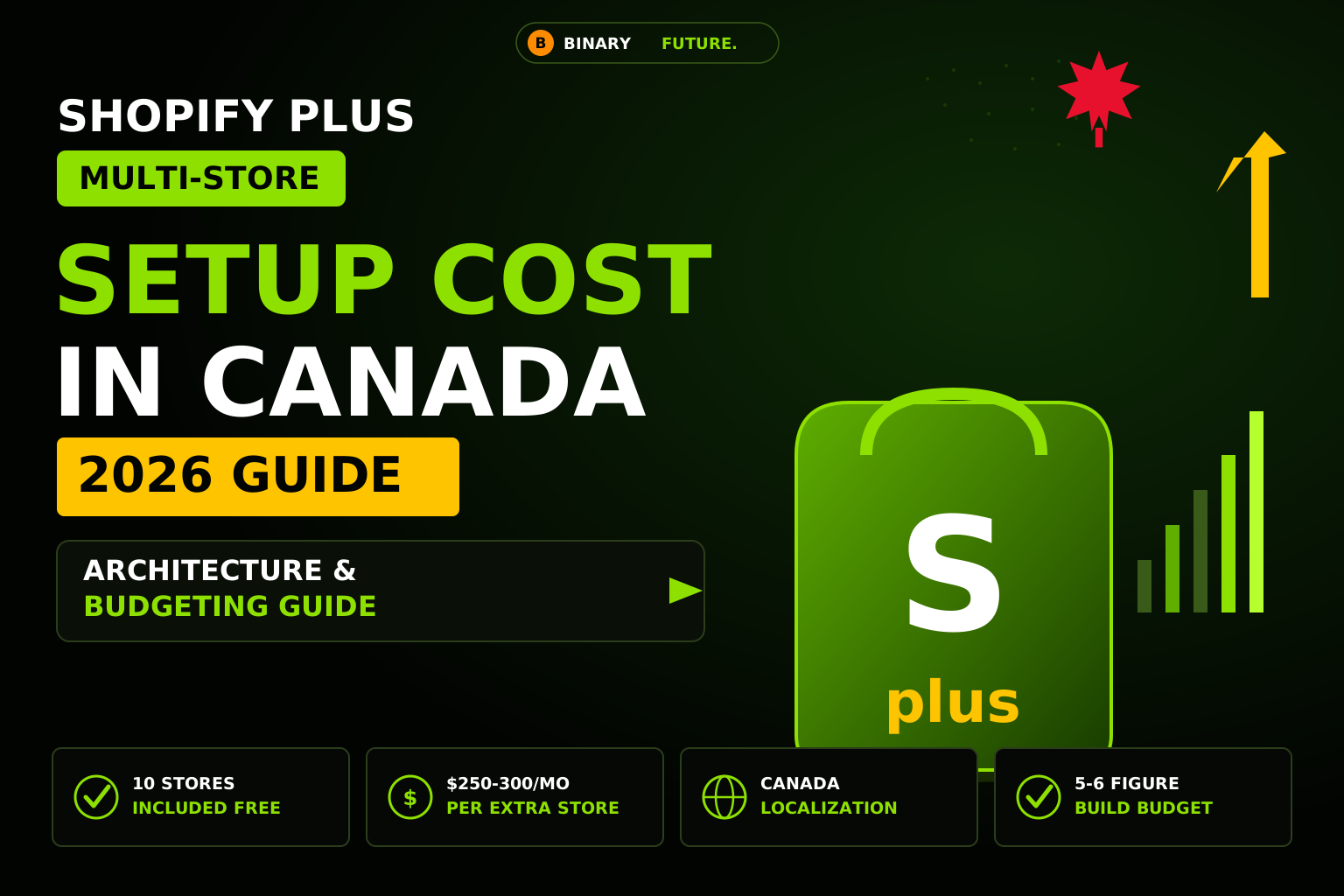
A practical view of the Shopify Plus multi-store setup cost in Canada for 2026. The platform fee includes far more than most teams realize, your main store plus 9 expansion stores at no extra per-store cost, so the real budget is driven by architecture and development, not licensing. This guide maps the cost drivers, breaks budget down by complexity, and shows where multi-store projects actually spend.
The biggest surprise in Shopify Plus multi-store pricing is good news: your Plus subscription already includes the main store plus 9 expansion stores (10 total) at no additional per-store fee. Additional stores beyond that run roughly US$250 to US$300 per month each. So the real cost to configure multiple stores on Shopify Plus is not licensing; it is architecture and development, design, catalog and inventory sync, localization, and ongoing maintenance. For a Canadian merchant, budget the one-time build per store from the low five figures for a clone to six figures for a complex localized or multi-brand store. Before building separate stores, decide whether Shopify Markets can serve your international needs from one storefront.
Multi-store is one of the strongest reasons to be on Shopify Plus, but the pricing is widely misunderstood. Teams either overestimate it, assuming each store carries a full subscription, or underestimate it, forgetting that the included stores still have to be designed, built, and kept in sync. This guide gives a Canadian CTO a realistic architecture-and-budget view, building on our Shopify Plus migration price in Canada guide.
Core Cost Drivers of a Shopify Plus Multi-Store Architecture
Once you set aside the platform fee, four drivers determine what a multi-store build actually costs.
1. Architecture model: expansion stores vs. Shopify Markets
The first and biggest decision. Shopify Markets lets you serve multiple countries, currencies, and languages from a single storefront, often the cheaper and simpler path for pure internationalization. Separate expansion stores make sense when regions or brands need genuinely different catalogs, pricing logic, operations, or branding. Choosing Markets where it fits can remove entire stores, and their build cost, from the project. Choosing expansion stores where you need real separation avoids forcing complexity into one overloaded storefront. Getting this decision right is the single largest lever on total cost.
2. Per-store design and build
Each store still needs a theme, catalog setup, and configuration, even though the license is included. The cost per store depends on how much is shared versus unique: a near-clone of your main store with a different currency is inexpensive, while a fully localized or separately branded store with its own design and catalog is a project in its own right. The number of genuinely distinct stores, not the total count, drives this line.
3. Data, inventory, and catalog sync
This is the hidden engineering cost of multi-store. Expansion stores are independent instances; they do not automatically share inventory, products, or customers. Keeping catalog and stock consistent across stores requires deliberate integration, often through middleware, an ERP, or a PIM. The more stores share inventory, the more this matters, and the more it costs if left unplanned.
4. Localization and ongoing maintenance
Multi-store cost is not only the build; it is the run. Translations, regional payment methods, tax and duty configuration, and per-region compliance add up front, and every store multiplies ongoing maintenance, updates, theme changes, and app management across each instance. A realistic multi-store budget treats maintenance as a recurring line, not an afterthought.
Estimated Budget Breakdown by Project Complexity
The table maps three common multi-store profiles for a Canadian merchant. Figures are one-time agency build cost in USD, on top of the Plus platform fee (roughly $2,300 to $2,500 per month, which already includes up to 9 expansion stores).
| Profile | Typical scope | Setup per added store | Total project (USD) |
| Clone / regional | Near-duplicate stores, currency and language only | Low | $11,000 to $33,000 |
| Localized international | Distinct catalogs, payments, tax, translations, sync | Medium | $33,000 to $80,000 |
| Multi-brand / complex | Separate branding, B2B, ERP/PIM inventory sync | High | $80,000 to $160,000+ |
Two forecasting notes. First, cost scales with how different the stores are, not how many there are; five near-identical regional clones can cost less than two distinct branded storefronts. Second, beyond 10 total stores, add roughly US$250 to US$300 per month per extra store to the recurring platform cost, and build a contingency for sync complexity discovered mid-project.
Solving the Multi-Store Inventory and Data Sync Challenge
The technical heart of any multi-store project is keeping data consistent across independent stores. Because expansion stores do not share a catalog or inventory by default, a sale in one store does not automatically decrement stock in another, and a price change has to propagate deliberately. Left unsolved, this produces the same silent data drift that breaks single-store ERP integrations: overselling, mispricing, and inconsistent product information across regions.
The solution is a deliberate sync architecture, usually a central source of truth (an ERP or PIM) that pushes catalog, pricing, and inventory to each store, with the bidirectional order and stock flow handled through middleware. The right design depends on how much the stores share: fully independent brands may need little sync, while regional stores selling shared stock need robust, real-time inventory synchronization. This is engineering work, and it is where multi-store budgets are won or lost. A team that treats sync as an afterthought will rebuild it later at higher cost.
Optimizing Your Multi-Store TCO with Binary Future
Binary Future is a Toronto-based Shopify Plus Partner that architects multi-store and international deployments to control total cost of ownership, not just launch them.
- Right architecture from the start. We help you decide between Shopify Markets and expansion stores per region, so you do not pay to build stores you did not need.
- Sync designed, not bolted on. Inventory, catalog, and pricing synchronization is architected upfront through ERP, PIM, or middleware, avoiding costly rebuilds.
- Shared components across stores. We build reusable themes and logic so each added store costs less, keeping per-store build and maintenance down.
- TCO, not just setup. We forecast the recurring cost of maintaining every store, so your multi-store budget holds over three years.
See our Shopify Plus development and Shopify headless development for how we approach multi-store architecture.