Paid Media and Retention Case Study: NYC Luxury
Gross ROAS climbed from 4.56 to 10.62 in six months on a budget that barely moved, with Meta, Google, email and SMS carrying different parts of the job.
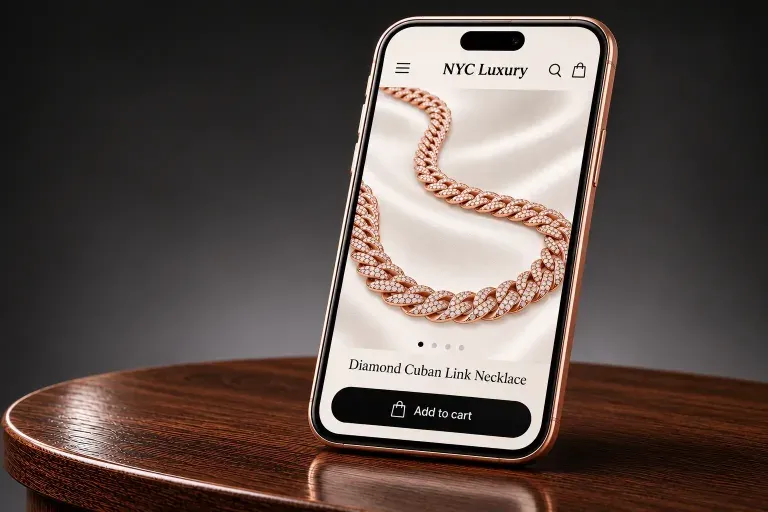
This case study covers six months of paid media and retention work for a Shopify jewelry brand selling Cuban link chains, diamond pieces and custom pendants to a US audience. Meta drove volume, Google captured existing intent, and Klaviyo with SMS turned promotional peaks into revenue. Gross sales grew roughly 2.5x while ad spend rose about 6%.
10.62× gross ROAS in December, up from 4.56 in July
NYC Luxury sells status. Buyers want jewelry that looks expensive on camera and in the hand, and that reads as desirable in a feed. The audience is mostly men in the US, concentrated in New York, with strong interest in hip-hop, sports and luxury lifestyle.
That audience asks three different things of an advertising account at once: find new buyers at scale, capture the ones already searching, and bring past customers back. No single channel does all three well.
The account was built so each channel did the part it was good at. Meta carried growth and creative testing. Google protected branded traffic and met shopping intent. Klaviyo and SMS handled retention and made promotional windows pay.
NYC Luxury
Jewelry e-commerce, gold and diamond pieces, custom work
United States, concentrated in New York
Shopify
2023, second half reported
The catalog runs from Cuban link chains and diamond chains to picture and memory pendants, with custom pieces made to order alongside it. That puts two kinds of demand in one store: the buyer who wants a known product today, and the buyer commissioning something that does not exist yet.
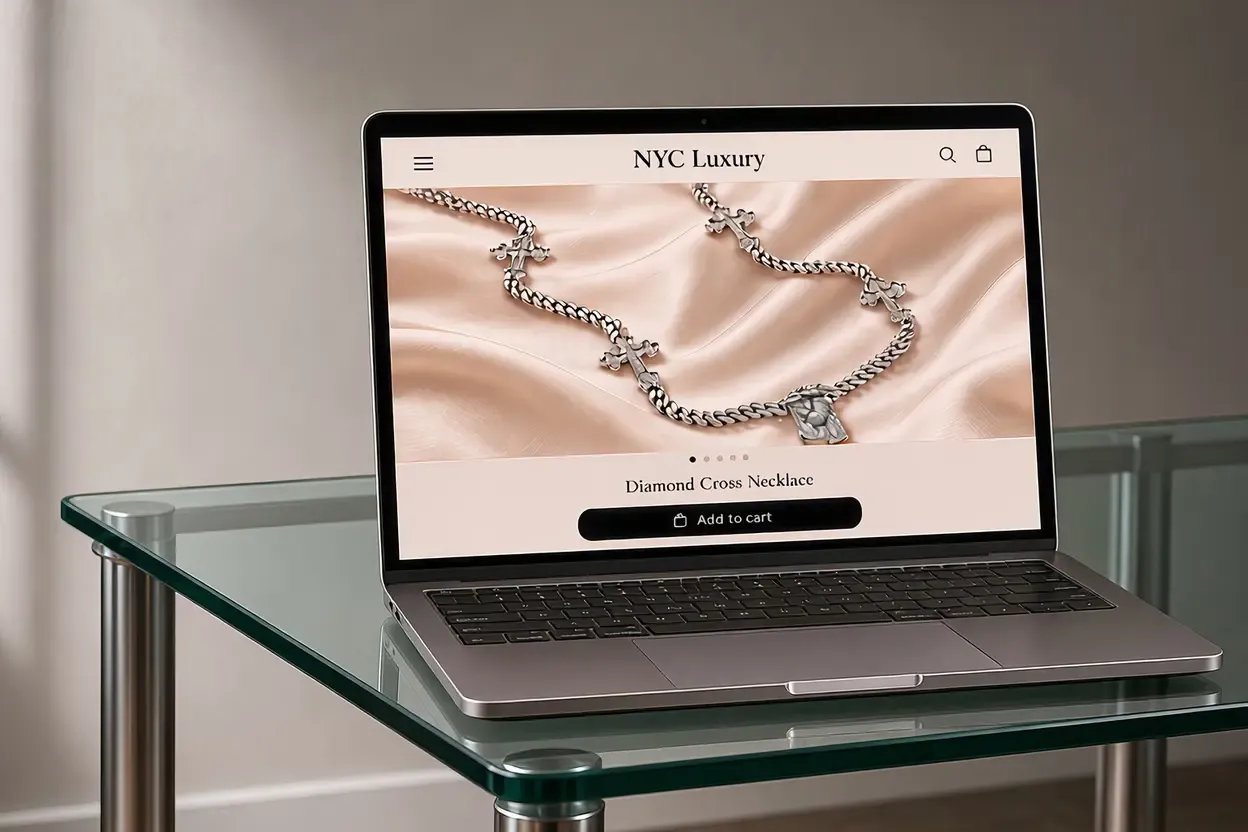
Men in the US who want a chain or pendant that reads as premium, often influenced by hip-hop, sports and lifestyle culture.
Seasonal demand around the holidays and Valentine’s, where framing, packaging and delivery speed decide the purchase.
Past buyers who respond to new drops and promotions, reached through email and SMS rather than paid auctions.
Meta volatility
ROAS swung, CPMs moved sharply and conversion quality varied. The swings were worst during scaling, during auction shifts, and after a creative had run too long.
Creative fatigue
Ads burned out fast. Without new hooks, angles and formats, CTR dropped, CPM rose and ROAS followed in that order.
Traffic that added to cart but did not buy
Some periods brought healthy traffic and add-to-cart rates with lagging purchase conversion. Traffic quality, mobile friction, price hesitation and trust all played a part.
Tracking that stopped agreeing with itself
Shopify checkout changes broke parts of the tracking logic and GTM events did not always pass through. Shopify, Meta and GA4 reported different numbers, so no single source could settle a question.
Returns eating into net results
Net ROAS rose more slowly than gross because returns took a larger share of sales in several months.
A calendar that concentrates the year
Black Friday, Valentine’s and the holidays carried a disproportionate share of volume, which raises the cost of getting those windows wrong.
Several channels with different jobs, rather than one winning campaign
Paid social opened the funnel, Google closed on intent, and lifecycle messaging monetised the peaks. A single-channel account would have put the whole business on one auction.
Creative refreshed on a schedule, rather than replaced after a drop
New hooks and video formats entered on a steady cadence, before performance fell, because recovering a fatigued account costs more than preventing fatigue.
Retention treated as infrastructure, not as a channel
Email and SMS flows plus repeat-buyer segments gave the business revenue that did not depend on Meta’s auction on any given week.
Meta campaign structure
Purchase campaigns, Advantage+ Shopping, catalog sales and retargeting formed the core. Retargeting covered site visitors, add-to-cart and initiate-checkout users, engaged social audiences, email lists and past purchasers. Dynamic product ads picked up abandoned carts and viewed products.
Creative built around the product
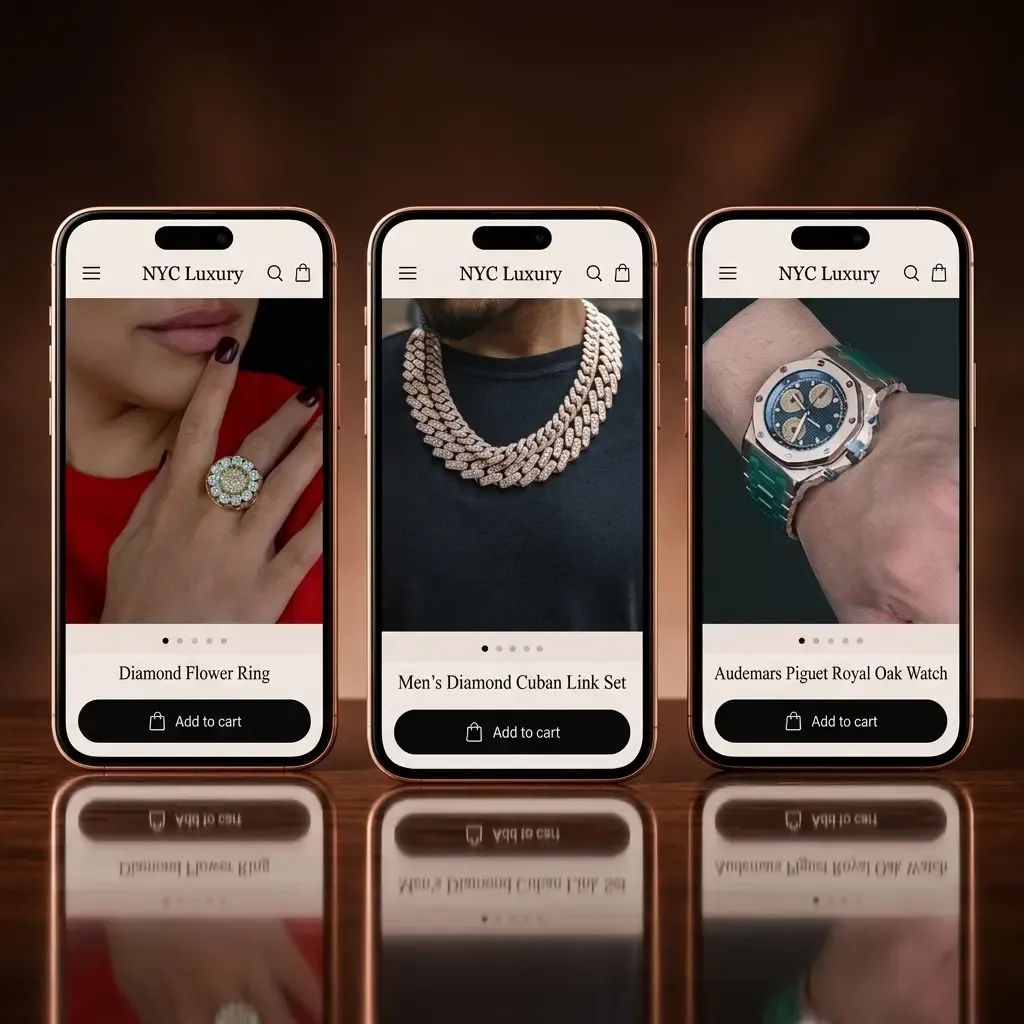
Close-up jewelry shots, hands, light moving across chains, unboxings, POV clips and urban lifestyle footage. Video consistently delivered the strongest CTR and engagement and the cheapest cold CPM. Cuban links, diamond chains and picture pendants sold best and got the most creative attention.
Google Search and Shopping
Brand Search protected branded traffic and produced cheap, high-converting purchases. Performance Max and Shopping met high-intent buyers, especially on mobile and for gift-oriented products. Product titles were rewritten to carry the terms buyers actually type: gold, diamond, Cuban, pendant, handcrafted, custom.
Klaviyo flows
Welcome, abandoned cart, browse abandonment and post-purchase. Abandoned cart was among the strongest flows in the account. Browse abandonment warmed up chains and pendants that had been viewed but not bought. Post-purchase handled upsells, cross-sells and repeat-purchase logic. Emails were image-led, mobile-first and built on urgency.
SMS through Attentive
Short, direct messages with one clear call to action. MMS with an image was tested against plain text and tended to earn higher CTR. SMS followed by an email follow-up was the strongest combination during promotions.
Promotional calendar
Black Friday, Valentine’s and the holiday season were planned as the peak windows. Free expedited shipping, free gift packaging and the handcrafted positioning resonated most. Gift framing carried the holiday period.
Tracking repair
Purchase, add-to-cart and initiate-checkout events were reviewed, deduplicated with event IDs, and checked for event match quality after Shopify checkout changes broke parts of the logic.
Retention as the floor under a volatile auction.
Paid social performance moves week to week for reasons outside any account’s control: auction pressure, creative age, seasonal competition. A brand that depends on it alone rides that curve with no floor underneath.
The flows built here gave the business a second source of revenue that answers to different rules. Abandoned cart recovered buyers who had already chosen a product. Browse abandonment re-engaged people who had looked at a chain and left. Post-purchase turned one order into a sequence. During promotions, an SMS followed by an email reached the same buyer twice through different doors.
The effect shows in the shape of the second half: ROAS rose in nearly every month, and the two months with the heaviest lifecycle activity, November and December, produced roughly half of second-half revenue.
Gross ROAS
more than doubled in six months, from 4.56 in July to 10.62 in December, rising in nearly every month.
Gross sales grew about 2.5x on roughly 6% more spend,
which is the whole point of the exercise: the growth came from efficiency, not from budget.
October was the most efficient month in relative terms,
carrying the lowest spend of the half year and still returning 7.66.
Net ROAS rose from 2.97 to 5.64
over the same period, more slowly than gross, because returns took a larger share of sales in several months.
| Month (2023) | Ad spend | Gross sales | Gross ROAS |
|---|---|---|---|
|
Jul |
$19.9K |
$90.7K |
4.56 |
|
Aug |
$20.0K |
$120.5K |
6.01 |
|
Sep |
$18.0K |
$115.7K |
6.43 |
|
Oct |
$12.7K |
$97.6K |
7.66 |
|
Nov |
$21.3K |
$197.7K |
9.30 |
|
Dec |
$21.1K |
$223.6K |
10.62 |
A brand whose product sells on how it looks, where creative quality decides acquisition cost
An account riding paid social volatility with no retention layer underneath it
A store whose year concentrates into a few promotional windows that have to be planned months ahead
A catalog where product titles were written for people rather than for the way buyers search
Paid media, creative and retention
Often enough that new hooks arrive before performance drops, not after. In this account the pattern was clear: CTR falls first, CPM rises next, ROAS follows. Treating the first signal as the trigger costs less than recovering a fatigued account.
Returns. In several months they took a larger share of gross sales, so the net figure moved from 2.97 to 5.64 while gross moved from 4.56 to 10.62. Any jewelry account should watch both.
None of them alone. Paid social brought buyers in, Google captured the ones already searching, and email and SMS turned promotional peaks into revenue. The ROAS curve reflects the combination.
Fix what can be fixed and pick one source for each question. Events were reviewed, deduplicated with event IDs and checked for match quality. Platforms still report differently, so the account was judged on the source appropriate to each decision rather than on whichever number looked best.
They work differently. Short SMS with one call to action performed best on its own, and during promotions an SMS followed by an email follow-up was the strongest combination in the account.