The conversion rate reflects a high proportion of cold, first-touch traffic for a considered purchase. Raising it is the work of the next phase, alongside lifting the share of organic, referral and repeat visits.
Brand Launch Case Study: Halftime Smoker
A portable smoker brand launched with no audience, no organic traffic and no customers, where paid social opened the funnel and lifecycle messaging closed it.
71%
of first touches from paid social
Prelude
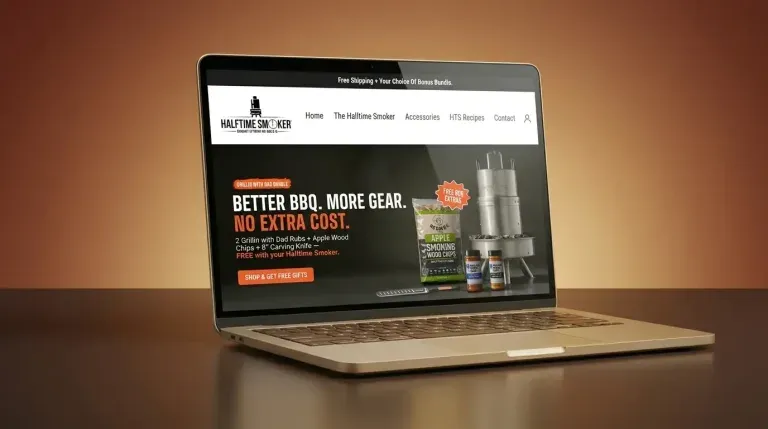
This case study covers the first year of a direct-to-consumer smoker brand that started 2025 with nothing: no brand awareness, no organic traffic, no customer base. Paid social had to open the funnel because no other channel could yet. Content, remarketing, email, SMS and a full seasonal promotional calendar did the work of turning cold traffic into orders.
Key outcome
A full acquisition and retention funnel built from zero in one year
Services used
Paid Social
Creative Strategy
Content Production
Paid Search
Email Marketing
SMS Marketing
Promotional Planning
Project overview
Halftime Smoker sells portable smokers along with the accessories that go with them: gloves, knives, thermometers, wood chips and covers.
The brand launched in 2025 with no existing audience. That ruled out the usual sequencing, where a brand builds organic presence first and layers paid acquisition on top. Everything had to be built at once: awareness, first demand, tested acquisition channels and a foundation that could scale.
Paid social carried the opening because nothing else could. It accounted for roughly 71% of first user interactions across the year, which made it the main way anyone discovered the brand at all.
About the client
Brand
Halftime Smoker
Industry
Direct-to-consumer, outdoor cooking equipment and accessories
Location
United States
Platform
Shopify
Period
Launched 2025
The founder appears in the product content himself, demonstrating the smoker on camera. For a brand nobody had heard of, that footage did the work that reviews and a known name do for an established competitor.
Target Audience
First-time buyers who have never heard of the brand
Cold traffic that needs several touches through content, remarketing and lifecycle messages before it converts.
Outdoor cooking enthusiasts
People already interested in smoking and grilling, reached through demonstration content showing the product in use.
Gift buyers in seasonal windows
Demand concentrated around Father’s Day, 4th of July, Thanksgiving, Black Friday and Christmas.
The challenge
01
Challenge 01
No existing demand to capture
With no awareness and almost no organic search, there was no warm audience to convert. Demand had to be created before it could be captured.
02
Challenge 02
Cold traffic takes several touches
Buyers needed content, remarketing and email before purchasing. A single-visit conversion model would have undercounted everything paid social was doing.
03
Challenge 03
Heavy dependence on one channel
Most first touchpoints came from paid social. Organic and referral were still early, so growth tracked ad performance closely.
04
Challenge 04
Promotions spike and then stop
Discounts drove clear jumps in volume, but the gaps between them needed their own plan to keep results steady.
05
Challenge 05
Little free traffic to offset rising costs
With organic under 1% of first interactions, there was no cushion against rising paid costs, which caps long-term efficiency.
06
Challenge 06
Trust for an unknown product
A portable smoker is not an impulse purchase from a brand nobody has heard of. The buyer needs to see it work.
Why this and not something else
A small content set, made well, rather than volume
Formats were deliberately limited so each asset could be produced properly and tested properly. Each piece had one of three jobs: drive sales through paid channels, build trust in the product, or build awareness.
Paid to open, lifecycle to close
Paid social was treated as the entry point rather than as the whole funnel. Remarketing and email and SMS did the work of converting people who had already arrived.
A planned promotional calendar instead of steady discounting
Each seasonal moment got its own offer and messaging, so the brand used peak demand windows rather than training buyers to wait for a permanent discount.
Binary Future’s involvement
Content built around demonstration
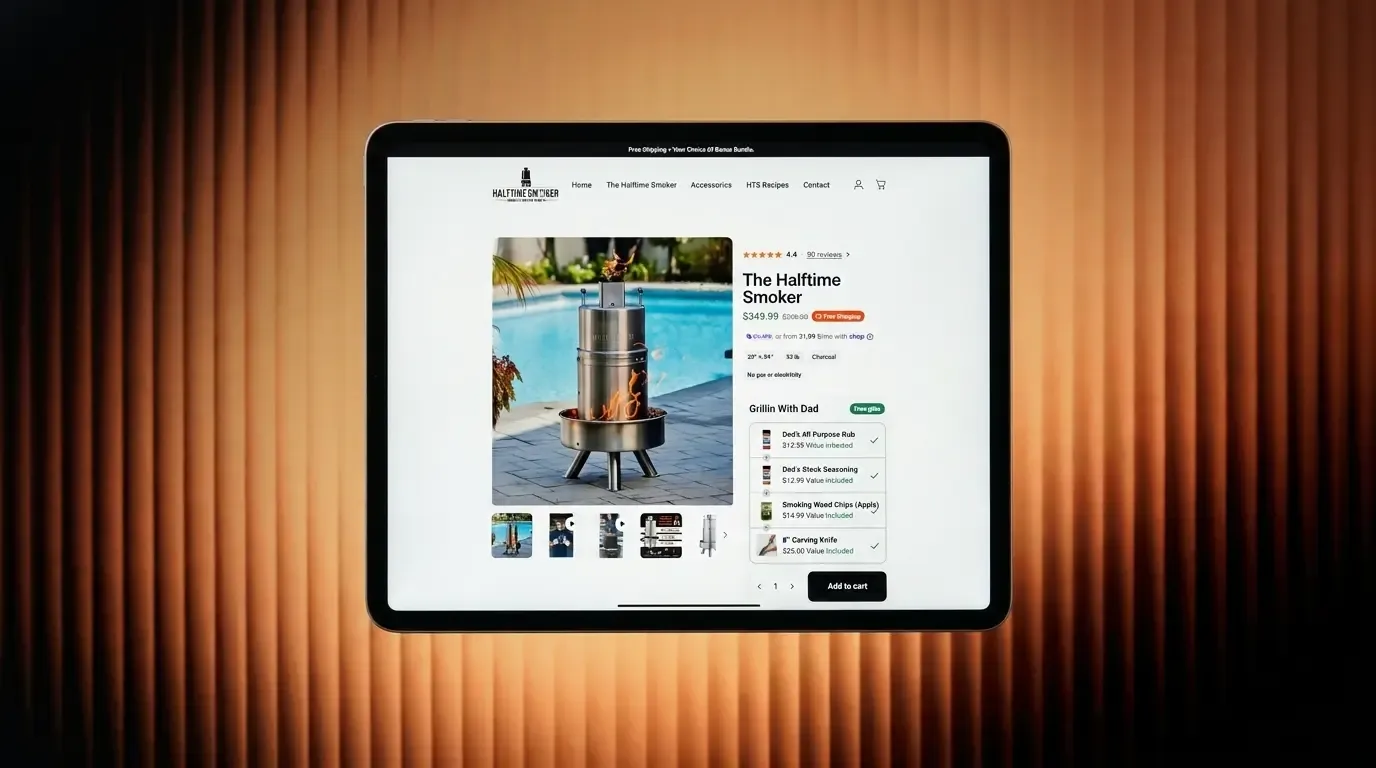
Visuals showed the smoker in use: wings glazed with sauce, pulled meat, the smoker on a patio, the founder demonstrating it on camera. For an unfamiliar product, showing it work does more than describing it.
Paid social as the acquisition engine
Campaigns carried roughly 71% of first user interactions across the year, making it the primary route to discovery. Cold traffic was warmed through content, remarketing and lifecycle messages rather than asked to buy immediately.
Paid search and direct capture
Paid search and direct traffic closed a meaningful share of purchases from people who already had intent. Direct accounted for about 5% of first interactions.
Email and SMS lifecycle
Small in volume next to paid traffic, but efficient relative to its size, and the mechanism that kept earlier visitors and buyers inside the funnel.
A full seasonal calendar
Easter, Mother’s Day, Memorial Day, Father’s Day, 4th of July, Labor Day, Thanksgiving, Black Friday and Cyber Week, and the Christmas season. Offers ran from $50 off to 15 to 25% off, holiday promo codes and bundles pairing the smoker with free accessories.
Trust mechanics alongside offers
Free gifts with purchase, a free cover in exchange for a review, and accessory launches such as a grill cleaner. Review incentives gave new visitors a reason to believe a brand they had never encountered.
Automation triumph
Turning a cold audience into a repeat one inside a single year.
The hard part of launching a DTC brand is not the first sale. It is that every sale costs full price in media because nobody arrives on their own.
The system built here attacks that from both ends. Demonstration content and review incentives shorten the distance between first impression and trust. Remarketing catches people who looked and left. Email and SMS reach buyers who already converted, at no auction cost.
By the most recent reporting window, 13.99% of customers were returning, which is the number that matters most for a brand this young: it is the first evidence that acquisition spend is buying more than one transaction.
Results
120,441 sessions
in the analytics period, from a brand that began the year with no traffic at all.
559 orders and $197.7K in gross sales
in the most recent reporting window.
13.99% returning customer rate,
showing that a meaningful share of buyers came back without being re-acquired.
A funnel that is measurable end to end:
2,041 add-to-cart sessions (1.69%) to 1,278 checkout sessions (1.06%) to 514 completed orders, at a 0.42% conversion rate.
Who this fits
A brand launching with no audience, no organic traffic and no customer list
A considered purchase that buyers want to see demonstrated before they commit
A business whose demand concentrates into seasonal windows worth planning around
A founder who can appear on camera, which shortens the trust problem considerably
Frequently asked
Launching a brand from zero
It can open the funnel, which is what it did here, carrying about 71% of first interactions. It cannot close it on its own. Cold traffic needed content, remarketing and lifecycle messages before converting.
Less than most assume, made better than most manage. The set here was deliberately small, with each asset assigned one job: drive sales, build trust, or build awareness.
Because the alternative is a permanent discount, which teaches buyers to wait. Each seasonal moment got its own offer and messaging, concentrating effort in windows when demand already existed.
For a considered purchase bought mostly by first-time visitors from cold traffic, it is the expected starting point. It rises as the share of returning and organic visitors rises, which is the focus of the next phase.
Dependence. With organic under 1% of first interactions, growth tracks ad performance closely and there is little free traffic to offset rising media costs. Lifting organic, referral and repeat share is what makes the growth durable.
No. The deduction schedule is calculated by an external system. The platform holds the state flag per item and gives staff the controls to pause, restart or stop deductions.