Most templates were incorporated into Klaviyo flows, with activation varying according to the business’s operational readiness. This engagement delivered the system; commercial results depend on how and when it is switched on.
Email Automation Case Study: Preface Wine
A new wine retailer with a shop, a tasting room and an events calendar, where fifteen branded emails across five journeys replaced ad-hoc follow-up with a system.
15 emails, 5 journeys
Prelude
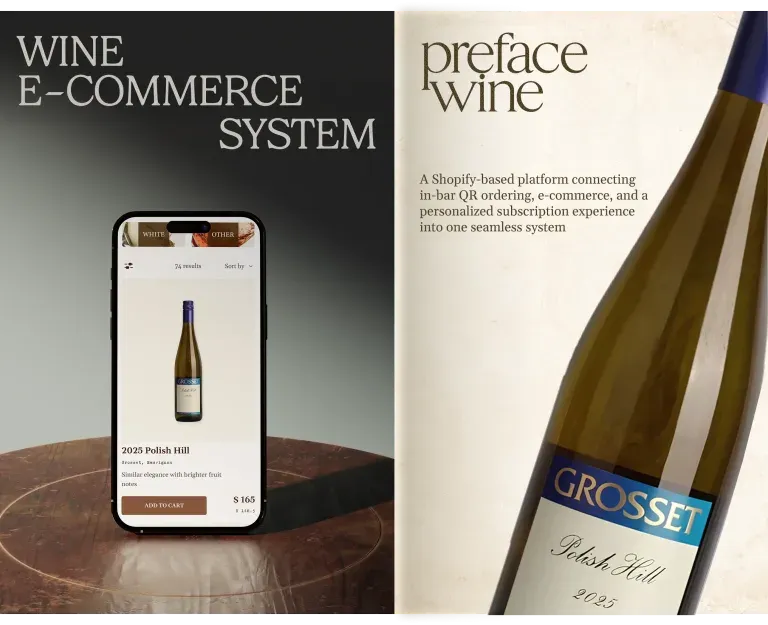
This case study covers the email marketing system built for a newly launched premium wine retailer in Delray Beach, Florida, where an online shop sits alongside in-person tastings, reservations and events. The work produced fifteen branded templates across five customer journeys, with Klaviyo configuration and Shopify integration behind them.
Key outcome
15 branded email templates across 5 automated customer journeys
Services used
Email Marketing Strategy
Klaviyo
Shopify Integration
Marketing Automation
Email Design
Copywriting
Project overview
Preface Wine combines an online wine shop with an in-person experience: reservations, tastings and events.
That combination is what made the email problem interesting. A customer might buy a bottle online, book a table, attend a tasting, then buy again. Each of those is a different moment with different information to deliver, and a newly launched business has none of the follow-up habits that mature operations build over years.
What was needed was not a newsletter. It was a communication system that could carry a customer across e-commerce and hospitality without the two feeling like different companies.
About the client
Brand
Preface Wine
Industry
Wine retail, e-commerce and hospitality
Location
Delray Beach, Florida, United States
Platform
Shopify with Klaviyo
Stage
Newly launched
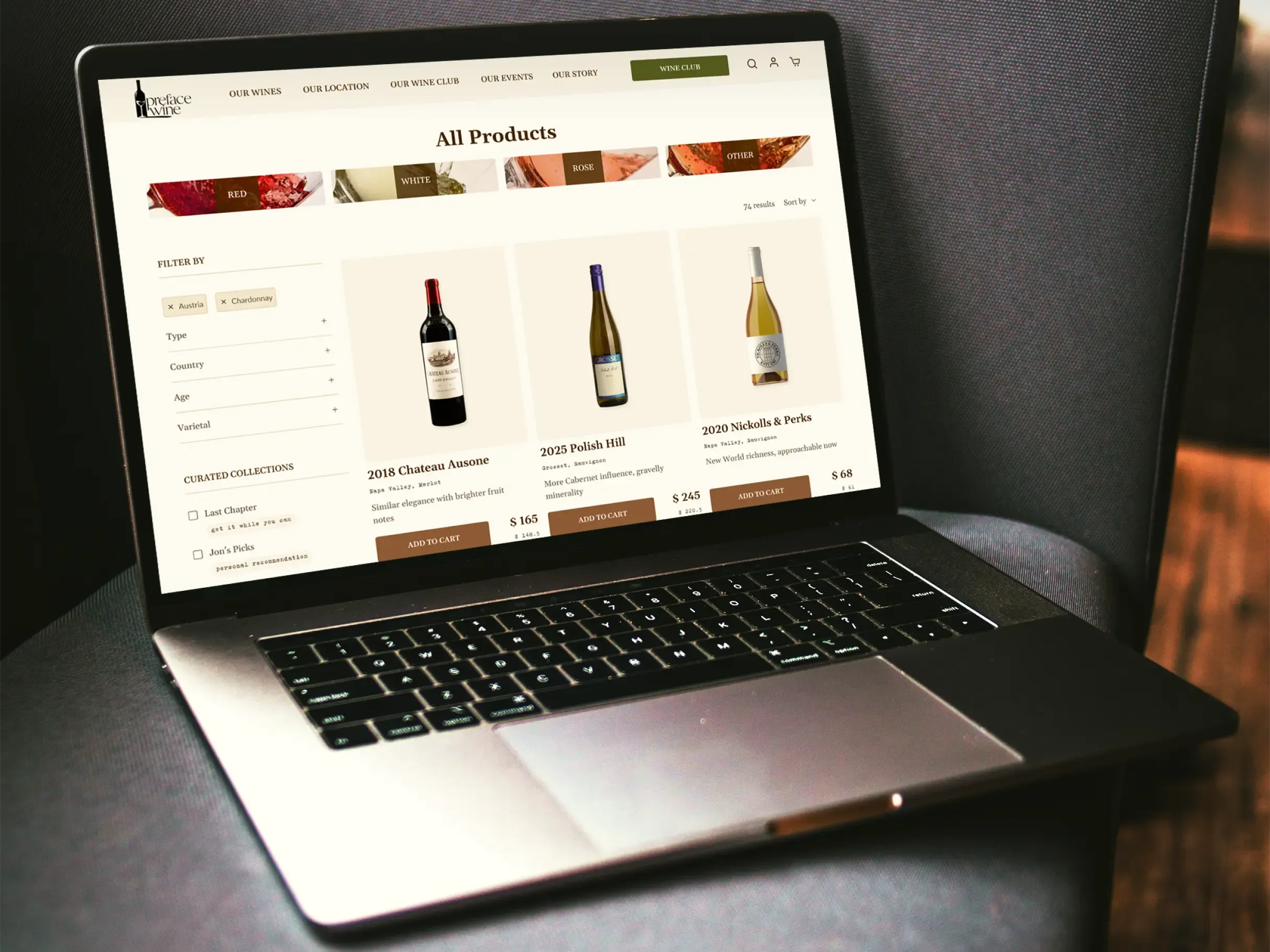
Preface sells bottles online and hosts people in the room: reservations, tastings and events in Delray Beach. The two halves share one brand and one customer, so a message about an order and a message about a table have to sound like they come from the same place.
Target Audience
Online wine buyers
Customers discovering the brand, browsing the shop and buying bottles for delivery.
Visitors booking an experience
People reserving a table or a tasting, who need confirmation, reminders and a reason to return.
Event attendees
Guests registering for tastings and events, with their own registration, reminder and follow-up sequence.
The challenge
01
Challenge 01
Two businesses, one brand
E-commerce and hospitality require different communication, and a customer crossing between them should not notice a seam.
02
Challenge 02
No established marketing processes
A new business has no follow-up routines, so the system has to supply them rather than support them.
03
Challenge 03
Transactional emails that read as system notifications
Order confirmations and cart reminders typically look nothing like the brand that sent them, which is costly for a premium positioning.
04
Challenge 04
Abandoned carts with no recovery path
Without flows in place, every abandoned cart is simply lost.
05
Challenge 05
A subscriber list that does not exist yet
List growth has to be designed, not assumed, when the brand is new.
06
Challenge 06
Operational readiness varies
A new business cannot activate everything at once, so the system has to tolerate being switched on in stages.
Why this and not something else
Five journeys mapped before any template was designed
Subscriber onboarding, abandoned-cart recovery, order fulfilment, reservations and event registration, each structured around customer behaviour rather than around a sending calendar.
Behavioural triggers rather than manual follow-up
Klaviyo flows built on audience conditions, timing and customer-specific messaging, which reduces dependence on someone remembering to send an email.
Custom design on transactional messages too
Confirmation and recovery emails were designed to the brand rather than left as defaults, because for a premium retailer the receipt is part of the experience.
Binary Future’s involvement
Lifecycle framework and journey mapping
Five core journeys defined, each with its own messaging logic and its own stage-appropriate information.
Klaviyo configuration and Shopify integration
Customer data synchronisation, behavioural triggers and automated communication, with flow structure, audience conditions and timing defined.
Fifteen templates across five sequences
Three emails each for welcome and newsletter opt-in, abandoned cart, order confirmation and fulfilment, reservation confirmation and visit, and event registration.
Design and copy as one system
Premium typography, warm neutral colours, wine photography, curated product selections and clear calls to action, with each email balancing its practical job against brand storytelling.
Subscriber acquisition
Newsletter signup messaging and lead capture concepts built around curated wine discoveries, brand updates and invitations to upcoming experiences.
Automation triumph
Making the receipt part of the brand.
Most businesses treat transactional email as plumbing. The order confirmation, the shipping notice, the reservation reminder: necessary, unbranded, ignored.
For a premium wine retailer that is a wasted room in the house. These are the emails that get opened, because the customer is waiting for them.
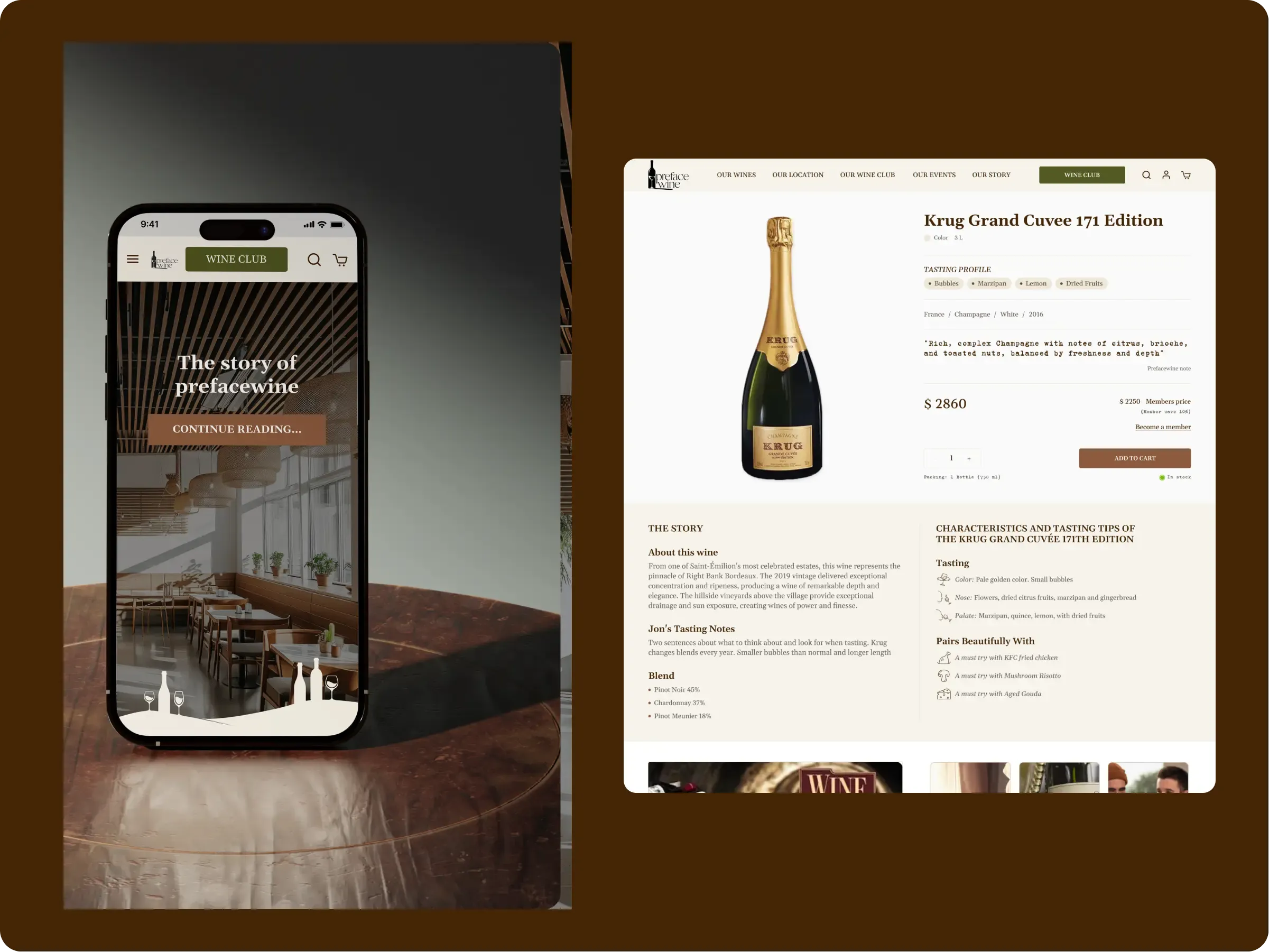
Every sequence here was designed to carry the brand rather than just the information. Order confirmations include curated recommendations. Reservation confirmations lead into reminders and post-visit engagement. Event registration becomes a sequence rather than a single receipt. The customer who books a tasting and later buys a bottle meets the same voice both times.
Results
15 branded email templates delivered across 5 customer journeys,
covering subscriber onboarding, cart recovery, order fulfilment, reservations and events.
Klaviyo configured and integrated with Shopify,
with behavioural triggers, audience conditions and timing logic in place rather than planned.
A unified brand experience across e-commerce and hospitality,
so a customer who buys online and visits in person meets one brand rather than two systems.
Subscriber acquisition designed rather than assumed,
with signup messaging and lead capture built around curated discoveries and invitations.
Who this fits
A newly launched business that needs communication habits it has not had time to develop
A brand operating both e-commerce and in-person experiences that should feel like one company
A premium positioning that cannot survive default transactional emails
An operator who would rather build flows once than write follow-ups individually
Frequently asked
Building an email system for a new brand
Building an email system for a new brand
Because a newsletter reaches people who already subscribed, and a new business has almost nobody. The journeys catch customers at moments that already exist: a cart left behind, an order placed, a table booked, an event attended.
For a premium brand, yes. These are the most-opened emails a business sends, because the customer is expecting them. Leaving them as system defaults wastes the best attention the brand gets.
Three worked for each journey here. Enough to recover a cart or prepare a visit, few enough that the customer does not feel pursued.
Nothing breaks. The flows were built to be switched on in stages, which is what happened: most templates went into Klaviyo flows, with activation following operational readiness.
Yes, with separate sequences and a shared brand. Order fulfilment and reservation confirmation are different jobs, but the customer should hear one voice across both.