The Ranking
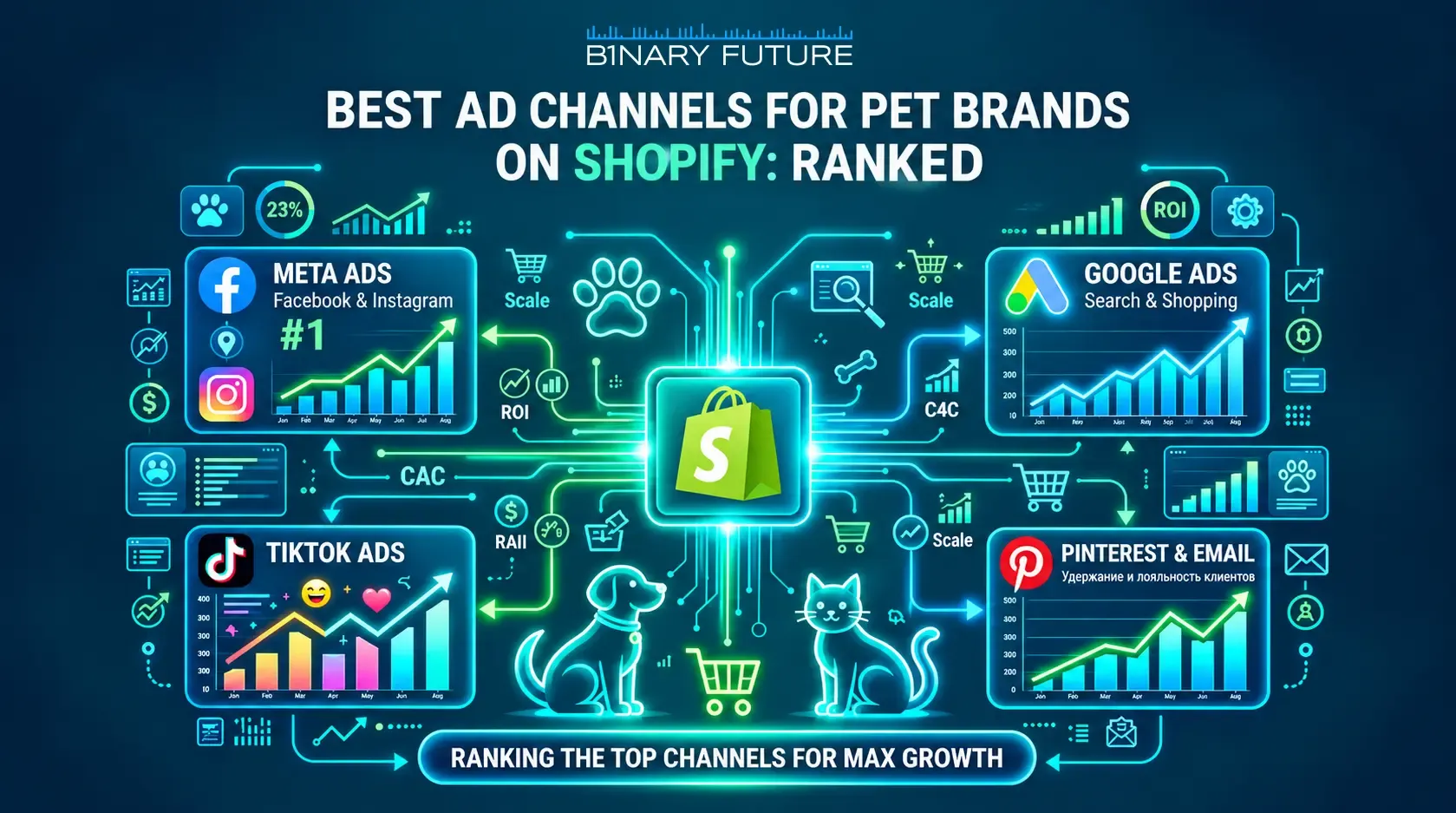
Ordered by what each channel does for a brand whose customers reorder. The right column matters as much as the rank.
| Channel | What it does for a pet brand | What to watch |
| Google Shopping | Captures owners already searching for a product or ingredient | Healthcare policies in Merchant Center, and accurate sizes and flavors in the feed |
| Meta, Facebook and Instagram | Creates demand for products nobody searches for yet | Claim wording in creative; prescription products need certification |
| Email and SMS | Turns a first order into replenishment | Timing tied to pack size rather than a fixed calendar |
| TikTok | Reaches new owners through native video | Creative volume; the same claim rules apply in captions |
| Agentic storefronts | Free placement in AI shopping surfaces | Product data and policies an AI agent can read |
| ChatGPT ads | Incremental reach among Free and Go users | Ads stay away from health topics |
Rank three surprises people, because email and SMS are not paid media. They belong in the list because they decide what every paid channel above them is worth: a pet brand pays for the first order and earns on the fifth.
Why Google Shopping Comes First
Pet owners search by product, brand, ingredient and need, often with a size attached. Shopping ads meet that search with a picture and a price, which suits food, treats and supplements bought to a repeat specification.
- Policy comes first. Google’s healthcare and medicines policy for Shopping ads restricts pet pharmaceuticals and unapproved supplements. Pet pharmacies and pet pharmaceuticals can be promoted only in the United States and Canada, and only by merchants accredited through LegitScript or the NABP .pharmacy program and certified by Google.
- Claims are part of the policy. Products that make false or misleading health claims are disapproved, and the words reviewers look for first are the ones that state or imply treatment, cure or prevention of a disease.
- Variants are the feed. Bag size, flavor and life stage should be separate items with their own identifiers, or the campaign spends on the wrong one.
Meta, Then the Channel That Makes It Pay
Meta’s job for a pet brand is introducing a product to owners who were not looking for it: a fermented supplement, a new treat format, a grooming routine. Pets photograph well and owners share them, so creative is easier to produce at volume here than in most categories.
Prescription products are the exception. Meta allows ads that promote prescription drugs only from advertisers certified through LegitScript or approved through its own review, only in the United States, Canada and New Zealand, and never targeted at people under 18. If anything in the catalog needs a vet’s prescription, plan the certification before the campaign rather than after the first rejection.
Email and SMS then decide whether that first order was worth buying: replenishment reminders timed to the pack size, a subscription offer at the second purchase, and post-purchase education on how to use the product. For MuttGut, a fermentation-based pet wellness brand, Binary Future built custom subscription flows, bundles and a Klaviyo integration with replenishment reminders, subscription nudges and post-purchase education, connected to a loyalty program.
Free, Cheap and Restricted: The Last Three
- TikTok. Native video of owners and their pets reaches new audiences at a price that rewards patience. Content made for the platform works better than ads reused from Meta, and the claim rules for a label apply to a caption too.
- Agentic storefronts. Active by default for eligible Shopify stores, the channel places products in ChatGPT, Google AI Mode and Gemini, Microsoft Copilot and Meta’s AI surfaces at no media cost. Manage it under Sales channels, Agentic. What an agent can read decides how it describes you: size, flavor, ingredients, life stage, and your shipping and return policies.
- ChatGPT ads. OpenAI shows ads only to logged in adults on the Free and Go tiers and keeps them away from sensitive and regulated topics, health among them. For a pet wellness brand much of the natural context sits close to that line, so treat it as a small test rather than a launch channel.
Fix the Label Before the Budget
In the US there is no separate legal category for animal supplements. FDA’s Center for Veterinary Medicine regulates animal products as food or as drugs, and the law that lets human supplements make structure and function claims does not apply to pets. A product that claims to cure, treat, prevent or mitigate disease is regulated as a new animal drug.
- Audit claims on every surface. Product titles, feed descriptions, ad copy, quoted reviews and the landing page. The platforms read all of them.
- Consider the NASC Quality Seal. The National Animal Supplement Council awards it to companies that pass a facility audit every two years and follow its labeling standards. It does not approve claims, but it tells buyers and reviewers that the brand follows an audited quality program.
- Keep prescription products separate. Give anything that needs a vet’s prescription its own collection, feed and landing page, so one restricted product does not put the rest of the account at risk.
Binary Future runs Shopify advertising and builds the store behind it as one team, so a disapproved feed item or a weak product page becomes a development ticket rather than a note to another vendor. Channel work runs through our Shopify Meta ads management and Shopify TikTok ads services.