Four Stages, Four Different Hires
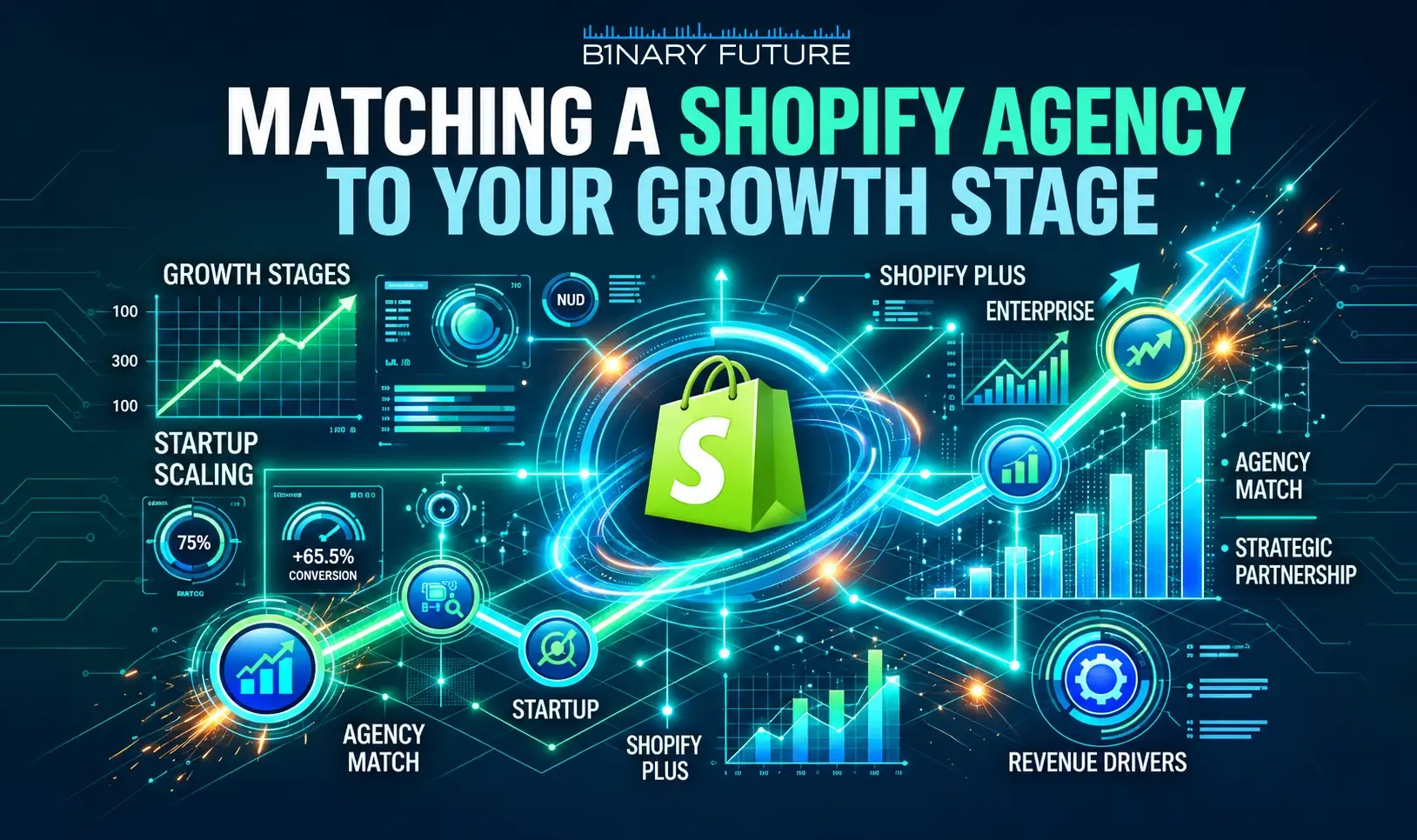
Each stage is defined by what holds growth back. That is more reliable than revenue bands, which shift with margin and category.
| Stage | What holds growth back | Who fits | Directory tier to expect |
| Proving the product | Traffic, and a first conversion rate worth improving | A theme specialist and one channel marketer, project by project | Registered or Select |
| Growing DTC brand | Ads point at store problems nobody is assigned to fix | One team for marketing and development on a monthly roadmap | Select or Plus |
| Scaling operations | ERP, B2B, subscriptions and markets pulling the store apart | An agency with Shopify Plus and integration experience | Plus or Premier |
| Global enterprise | Many regions, brands and teams on one platform | An enterprise partner with a matching account structure | Premier or Platinum |
The second row is where most mismatches happen, in both directions. A brand hires an enterprise partner whose minimum engagement is sized for a much larger company, or keeps a freelancer whose work stops at the theme while the problems have moved into the checkout and the data.
What Each Stage Should Buy
- Proving the product. A clean theme setup, product pages that load fast, and one acquisition channel run well. Avoid long minimum terms: the store will look different in six months, and the contract should not outlive the plan.
- Growing DTC brand. This is the stage where marketing data starts pointing at the store: a checkout losing mobile buyers, a product page that cannot explain the product, a feed out of step with stock. Buy a team that reads ads, email and analytics and ships the fixes on the same roadmap, so a finding never waits for a second vendor.
- Scaling operations. ERP and inventory sync, B2B price lists, subscriptions and several markets start to interact. B2B has been available on all paid Shopify plans since April 2, 2026, so wholesale alone no longer forces a move to Plus; integrations and order volume usually do. Buy integration experience and an agency that has delivered Shopify Plus development projects of that shape.
- Global enterprise. Several regions, brands or business units on one platform, with procurement, security review and internal IT involved. Buy a partner whose account structure matches yours. The tier matters most here, because Premier and Platinum partners are set up for exactly this work.
What a Partner Tier Does and Does Not Tell You
Shopify closed its Plus Partner program in December 2024 and replaced it with five tiers: Registered, Select, Plus, Premier and Platinum. Tiers are reviewed every quarter and earned on commercial measures, such as revenue from merchants a partner refers and serves, rather than on a review of project quality.
- It tells you the size of business an agency usually works with, and that Shopify has verified a commercial track record.
- It does not tell you whether the agency has solved your problem before, who will work on your store, or what happens after launch.
- It changes. Tiers move every quarter, so check the directory on the day you shortlist rather than the badge on the agency’s homepage.
For the rest of the vetting, from case studies to red flags, see how to choose a Shopify agency. If the stage question is really a plan question, Shopify Plus vs Shopify covers when the upgrade pays for itself.
Binary Future is a Shopify agency built for the second and third rows of that table: growing ecommerce brands whose marketing data keeps pointing at the store. One team runs paid ads, email and conversion testing and ships the fixes in the theme, checkout and integrations, backed by 80+ Shopify Plus builds.