Why Shopify is the Go-To Platform for eCommerce Success
The commercial argument for Shopify is not features. A brand can start on the cheapest plan and reach enterprise volume without a replatform, which removes the largest unplanned cost most growing retailers face.
That matters more this year. Native B2B now runs on Basic, Grow, and Advanced at no extra cost, so a DTC brand can serve wholesale buyers from the same admin. Shopify reports merchants using its B2B tools see up to a 4.1x increase in reorder frequency compared with DTC (Shopify, April 2, 2026). A second revenue line with no new acquisition budget, and building it properly is what B2B Shopify development covers.
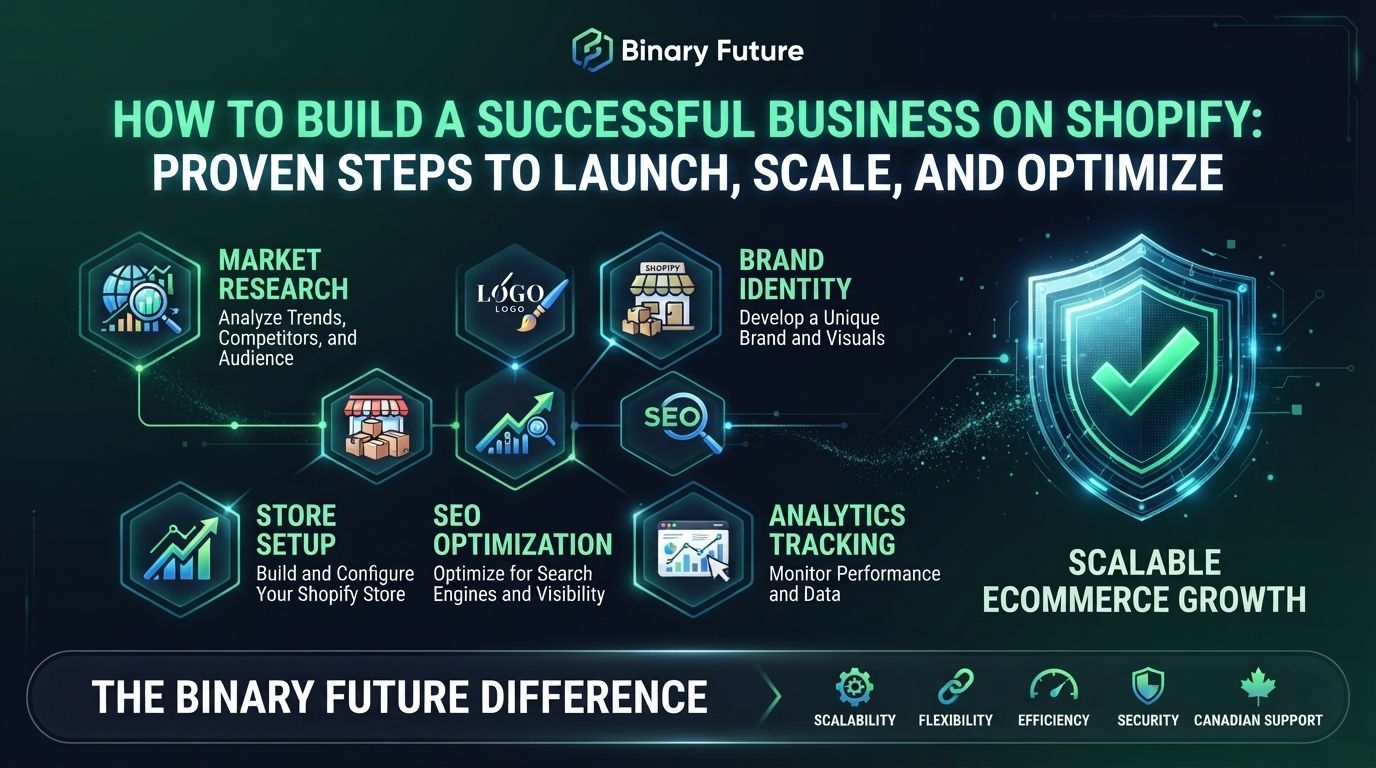
Step 1: Market Research to Build a Successful Shopify Business
Most stores that stall did not lose to a competitor. They picked a segment where the achievable margin never covered the cost of reaching it. Establish three things before spending anything: what the segment will actually pay, what it costs to reach one buyer there, and whether that buyer comes back.
Step 2: Define Your Target Audience and Brand Identity
Brand work pays for itself in one way. It lets you charge more than a commodity seller for the same product. If a rebrand does not raise the price customers accept or the share who buy again, it is decoration.
Step 3: Store Setup Features for a Successful Shopify Business
Setup is where traffic turns into revenue or does not. Mobile speed, product page clarity, and a familiar payment mix account for most of the gap between two stores selling the same catalogue.
Since June 2026 Shopify includes native A/B testing through Rollouts, so layout changes can be tested on live traffic without paying for a testing app. Wholesale setup is its own discipline, and pricing and account structures for B2B on Shopify covers what changes when the buyer is a company.
Step 4: Build Trust with Social Proof and Reviews
Reviews are the cheapest conversion asset a brand owns. They cost operational effort rather than media budget, and they keep working after a campaign stops. Loox, Judge.me, and Yotpo collect them at low cost.
Step 5: Develop a Pricing Strategy for Profitability
Price is the only lever that moves profit without moving volume, and owners touch it last. A five percent price increase on a healthy margin normally beats a five percent lift in conversion. Three checks worth running this quarter: what competitors charge for the nearest comparable product, whether discounting is buying revenue at a loss, and what margin looks like after payment fees, shipping, and returns.
Step 6: Optimize for SEO and Organic Traffic
Organic is the only channel where cost per acquisition falls over time. In 2026 it has a second half. Eligible Shopify products are syndicated through Shopify Catalog to ChatGPT, Copilot, and the Shop app by default, so product data completeness now decides whether an assistant recommends you or a competitor (Shopify, June 17, 2026). Thin titles and missing specifications are lost revenue now, not a backlog item.
Step 7: Leverage Social Media and Influencer Marketing
Treat social as paid media even when it is unpaid, because it consumes the scarcest resource an owner has. Judge partnerships on cost per acquired customer and whether those customers reorder, not on reach.
Step 8: Use Shopify Apps and Integrations to Boost Efficiency
Apps solve the first stage of growth and become the bottleneck in the second. A store adds a tool per problem until staff spend the week reconciling systems that disagree. The switch comes when order volume makes manual reconciliation more expensive than a real connection between Shopify and the finance or inventory system. That is the point to look at Shopify CRM and ERP integrations, and our guide to choosing an ERP integration partner in Canada covers how to scope it. One correction to older guides: Oberlo was retired by Shopify in 2022.
Step 9: Provide Exceptional Customer Support
Support is a retention line, not a cost line. A buyer whose problem is solved quickly orders again more often, and repeat buyers carry no acquisition cost. The same applies to the store itself, since unattended stores accumulate broken integrations and silent checkout errors. That is what ongoing Shopify maintenance and support prevents.
Step 10: Track Performance with Shopify Analytics
Four numbers run the business: conversion rate, average order value, customer lifetime value, and acquisition cost. Everything else is diagnostic.
One warning specific to this year. Non-Plus stores have until August 26, 2026 to upgrade their Thank you and Order status pages, after which Shopify upgrades them automatically and removes legacy customizations (Shopify Help Center). Orders keep arriving. What stops is the tracking that tells you which campaign paid for them.
Conclusion: Turn Your Shopify Store into a Profitable Business
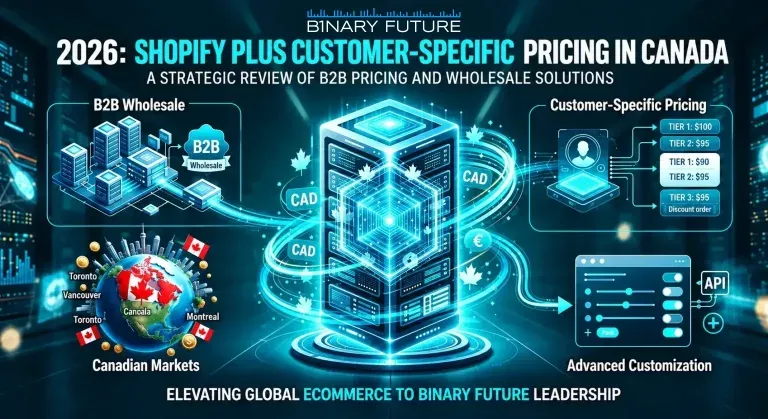
Profit comes from a few decisions repeated well: charge what the product is worth, make the second purchase easy, open channels that do not need more ad spend, and keep the measurement honest. Wholesale is the clearest example this year. Why Shopify Plus is ideal for B2B eCommerce shows where the plan boundary sits: non-Plus stores get up to three custom catalogs, while unlimited customer-specific pricing stays on Plus.