B2B Lead Generation Case Study: Xonar Technologies
Security screening equipment rented to stadiums and schools, where cost per lead fell 72% in a month after the path from a high-intent search to a working form was repaired.
This case study covers paid search for a B2B equipment rental business whose buyers arrive with a specific need and a date in the calendar. Search was already bringing the right clicks. The inquiry page was losing them. Fixing the form and rebuilding campaigns around search intent cut cost per lead from $625 in July to $173 in August while spend fell 31%.
72% reduction in cost per lead, month over month
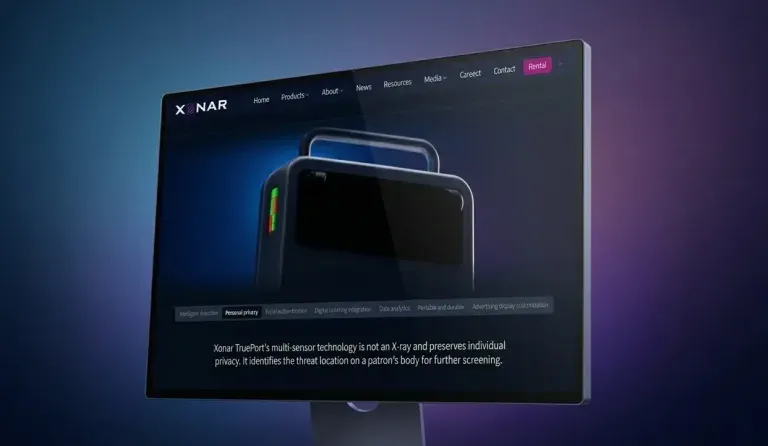
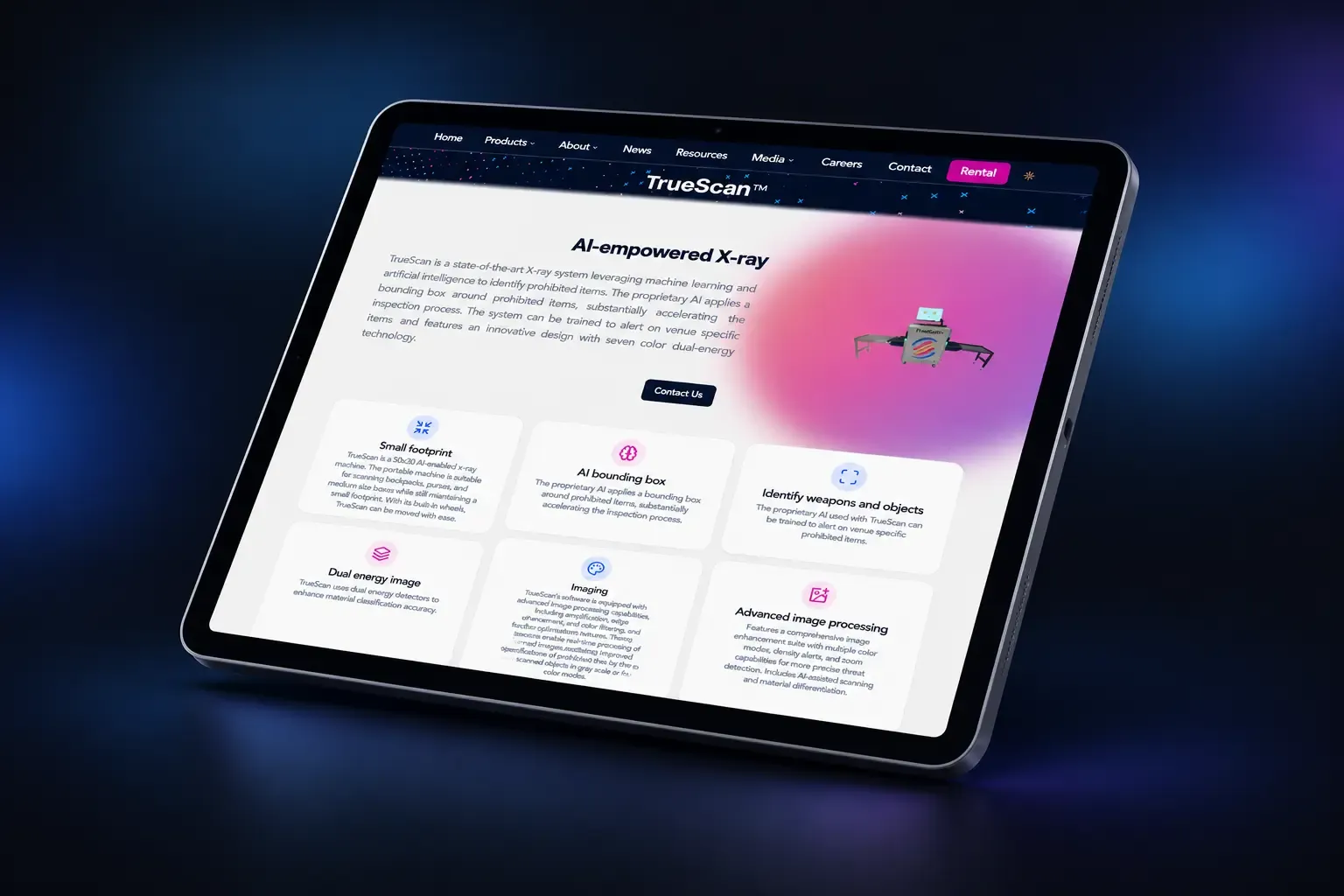
Xonar Technologies makes TruePort, a walk-through AI screening system, and TrueScan, a portable X-ray unit. The equipment is rented to stadiums, arenas, schools, government buildings and event venues. The company holds a DHS SAFETY Act designation, which lets rental partners share liability protection with the people they serve.
A venue operator or security director with an event approaching starts with a specific need and types it into Google: metal detector rental, walk through body scanner, ai metal detector. Those queries carry an intent that display and broad reach campaigns cannot match.
The job was to make search the main source of rental leads, and to make sure every click that signalled a real need found a form that worked.
Xonar Technologies
Security screening equipment, B2B rental
United States
TruePort walk-through AI screening, TrueScan portable X-ray
DHS SAFETY Act designation
Xonar makes TruePort, a walk-through AI screening system, and TrueScan, a portable X-ray unit, and rents both to stadiums, arenas, schools, government buildings and event venues. Renting rather than selling ties a deal to a venue and a date. Its DHS SAFETY Act designation extends liability protection to the partners who rent, so the designation is part of what a buyer acquires.
Stadiums and arenas with scheduled events and a fixed date by which screening must be in place.
Buyers evaluating screening for a site rather than an event, usually on a longer approval cycle.
Short-horizon rental needs where the search happens weeks before the event and the decision involves more than one visit.
The right clicks reached a broken page
Search term reviews in July showed rental-intent queries spending money with zero conversions. Brand searchers, who should convert best of all, produced nothing.
The form was the bottleneck
A CRO audit found the form failing on load, a submit method that dropped data, and nine fields for a first-contact inquiry.
Spend going to queries with no buyer behind them
A competitor campaign ran through $190 with no leads. A gun detection keyword attracted hobbyist and software searches rather than rental buyers.
Campaigns built by category, not by intent
A walk-through buyer, a brand searcher and an event renter want different pages and different messages, and a category-level structure serves none of them well.
A buying cycle longer than the default window
Event buyers research for weeks before submitting a form, so a short conversion window would credit the wrong campaigns.
Challenge 06. Delivery mismatched to the buyer
Business-hours-only delivery assumed a buyer who only works weekdays, which turned out not to hold.
Search as the main channel, not one of several
For B2B equipment rental, the buyer announces their need in the query. Display and broad reach campaigns cannot distinguish a security director with an event in three weeks from anyone else.
Campaigns built around the query rather than the product category
Walk-through generic, brand, event rental and weapons detection campaigns each target a different intent, with sector campaigns for schools, stadiums, government and healthcare added in late July.
A 90-day conversion window matched to how these buyers decide
Event buyers research for weeks before they submit. Some leads came from returning visitors submitting on a second visit, a pattern that confirms real evaluation rather than a one-click decision.
CRO audit and form repair
The audit identified the form failing on load, a submit method dropping data, and an unnecessary nine fields at first contact. The audience was right. The page was the problem, and it was fixed first.
Campaign architecture by intent
Separate campaigns for walk-through generic, brand, event rental and weapons detection, followed by sector campaigns for schools, stadiums, government and healthcare in late July.
Spend cut where no buyer existed
The competitor campaign was removed in early June after $190 with no leads. The gun detection keyword was paused. Irrelevant queries were added as negatives on a regular schedule rather than in occasional cleanups.
Delivery matched to the buyer
Ads ran on weekday business hours from late July. Weekend delivery was tested in August and then kept on for every campaign.
Converting queries scaled.
Ai metal detector moved to exact match with a higher bid. Metal detector hire was added to the event campaign after appearing in search terms.
Performance Max for sector reach
Asset groups for stadiums, festivals, schools and healthcare launched in August, with a placement cleaner filtering weak placements.
Finding that the audience was never the problem.
An account spending money on rental-intent queries with zero conversions invites one obvious conclusion: wrong targeting. That conclusion would have led to more audience testing, more keyword churn and more money spent on the same broken outcome.
The CRO audit found something else. Brand searchers, the warmest traffic any account has, were also converting at zero. That single fact pointed away from targeting and towards the page. The form was failing on load, the submit method was dropping data, and a first-contact inquiry asked for nine fields.
Everything after that was ordinary campaign work. The reason it produced a 72% drop in cost per lead is that it ran on a path that now completed.
Cost per lead fell 72% from July to August while spend dropped 31%, so the improvement came from efficiency rather than volume.
The event rental campaign moved from $187 per lead in July to $128 in August, the clearest single-campaign improvement.
Ai metal detector produced leads at about $13 each, the lowest cost in the account, after moving to exact match with a higher bid.
In the week of August 10 to 16, every lead came from a search campaign triggered by an intent-rich query, confirming where this buyer actually starts.
| Period | Google Ads spend | Cost per lead |
|---|---|---|
|
June |
$462 |
First lead June 30, at $30 |
|
July |
$2,499 |
$625 |
|
August |
$1,726 |
$173 |
B2B equipment rental where buyers search for a specific need with a date attached
An account with healthy search intent and poor conversion, where the page rather than the targeting is suspect
A longer buying cycle that a default conversion window would mis-attribute
A business selling into distinct sectors that each deserve their own campaign and message
High-intent search for B2B rental
Check brand searchers. They are the warmest traffic an account has. If they also convert at zero, targeting is not the issue. That was the signal here, and it pointed straight at a form failing on load.
Because event buyers research for weeks before submitting. A short window credits the last click and hides the campaign that created the need. Some leads here came from returning visitors converting on a second visit.
Fewer than nine, which is what this one had. First contact needs enough to qualify and reply, not everything the CRM will eventually hold.
Only if it produces leads. This one spent $190 with none and was removed in early June. Competitor traffic in a specialised B2B category is often people comparing specifications rather than buyers ready to rent.
As a layer for sector reach, with supervision. Asset groups for stadiums, festivals, schools and healthcare launched in August alongside a placement cleaner to filter weak placements. Search campaigns remained the source of intent-driven leads.