Shopify Updates 2025: B2B Scaling and Global Commerce
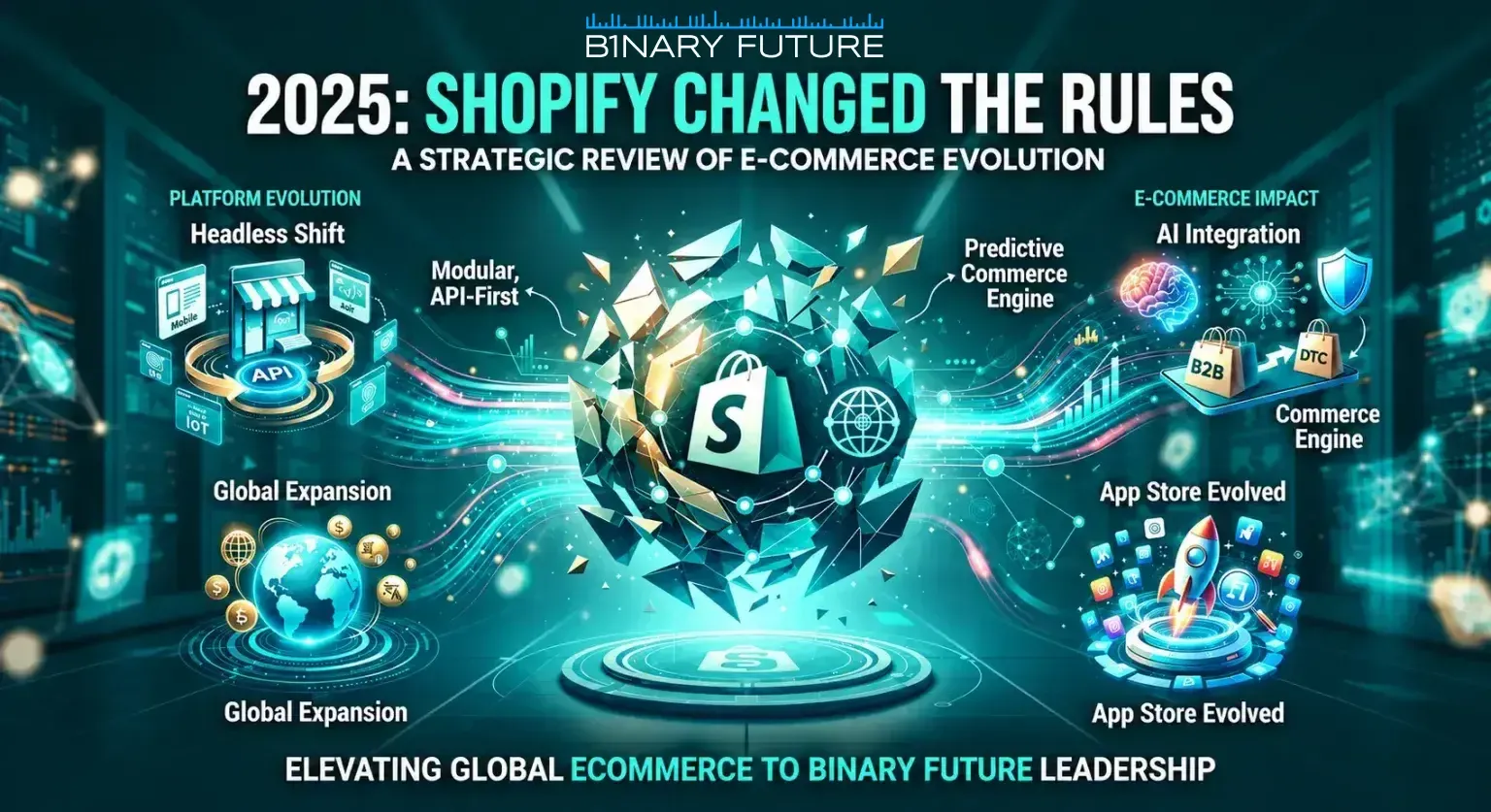
The 2025 direction was closing the gaps that pushed larger businesses onto other platforms: better B2B account logic, order automation, and international selling that did not require a separate build per market.
Strengthening Positions in the B2B E-Commerce Sector
2025 brought expanded company account hierarchies, individual payment terms and credit limits, and order automation for bulk orders and quote requests through Flow and Functions.
Checked against 2026, this is the prediction that was too cautious. On April 2, 2026 Shopify moved native B2B onto Basic, Grow, and Advanced at no extra cost, so company profiles, net terms, volume pricing, and self-serve reordering stopped being enterprise features entirely (Shopify, April 2, 2026). Plus kept unlimited catalogs and catalogs assigned to a specific company. Where the line actually sits now is set out in Shopify Plus for B2B, and building on it is B2B Shopify development.
Global Expansion through Shopify Markets
Markets was refined through 2025 around duty and tax automation under a DDP model and centralised management of currencies and languages. The commercial argument was that landed cost shown upfront reduces abandonment at checkout.
That held, with a caveat worth knowing before planning a 2026 rollout: market allowances tightened rather than loosened. Lower plans include a small number of markets, and additional markets on Advanced carry a per-market cost. International expansion is now a plan-level budget question, not only an implementation one.
Launch of Shopify Functions: The End of Shopify Scripts
This was the clearest call of the year and it now has a date attached. Editing and publishing Scripts was disabled on April 15, 2026, and all Scripts stopped executing on June 30, 2026 (Shopify developer documentation). Discount, shipping, and payment logic runs on Shopify Functions. Public apps containing functions work on any plan, while custom apps containing Function APIs remain a Plus capability.
The practical consequence for merchants was larger than the announcement suggested. Scripts logic does not migrate to Functions. It has to be rebuilt, which means any store that treated the deadline as a platform housekeeping item discovered in July that its discount rules had simply stopped.
A second deadline followed from the same direction of travel: stores on non-Plus plans must upgrade their Thank you and Order status pages by August 26, 2026, after which Shopify does it automatically and removes legacy customisations. The checkout side is covered in Shopify Plus checkout customization.
Headless as the Standard for Efficiency
This is the section we got wrong. In December 2025 we expected headless architecture, meaning the Storefront API with React or Next.js, to become the norm for brands chasing high PageSpeed scores.
It did not. Shopify invested in the opposite direction, making block-based theme editing native so that most layout work became editor work on every plan. Headless also stopped requiring a commitment: Shopify rebuilt Hydrogen in 2026 as a framework-agnostic toolkit rather than a Remix-tied framework. Headless is now easier to adopt and needed less often, which is not the trajectory we described. The current picture is in the headless toolkit for 2026 and the threshold question in when headless is actually worth it.
A New Era of Quality: The Built for Shopify Revolution
The most durable change of 2025 was that app quality became a distribution mechanism rather than a marketing claim.
BFS as a Driver of Growth and Seller Trust
Shopify reports that apps achieving Built for Shopify status see an average increase of 49 percent in new installs within 14 days of certification (Shopify Partners). That is a vendor-reported figure, and it is also the reason the programme reshaped developer behaviour so quickly.
Priority Visibility and New Discovery Channels
BFS recommendations moved into the App Store homepage header and into priority placement across category pages. In 2026 that extended into the admin itself: Sidekick App Extensions launched with more than fifteen partners including Klaviyo, Loop, Smile, Judge.me, and Yotpo, surfacing app functionality inside the assistant rather than in a separate interface (Shopify, June 17, 2026).
Strengthening Criteria and Annual Quality Reviews
The bar has kept moving, which was the point. Certifications are reviewed annually, apps that stop meeting the standard lose the badge, and category-specific criteria continue to expand. The next dated requirement is December 1, 2026: returns, exchanges, and subscription apps offering buyer-facing self-service must authenticate through the Customer Account API or risk losing status.
For a merchant the practical reading is simple. An app that lost its badge quietly is a signal worth checking during a stack review, and where an off-the-shelf app cannot meet a requirement your business depends on, custom Shopify app development is the alternative. When that is worth doing is covered in the build or buy question.
Architectural Revolution: Headless and Functions
The two architectural changes of 2025 turned out to work in opposite directions. Functions centralised custom logic inside Shopify and put it behind a plan boundary, since custom Function apps require Plus. Block-based themes decentralised layout control and pushed it out to every plan without code.
The combined effect is that in 2026 the question is no longer whether to go headless. It is which layer your constraint actually sits in: theme, logic, or frontend. That determines both the budget and the plan, and the plan side of it is in Shopify Plus vs Shopify. Where the constraint is genuinely platform-level, it is resolved by Shopify Plus development.
Key KPIs: What Shopify’s 2025 Revolution Means for Financial Metrics
The 2025 changes were framed at the time as improvements to lifetime value and acquisition cost. Eight months on, the honest version is narrower and more useful.
- Deadlines, not gains, drove the spend. Most 2026 budget attributed to these changes went to Scripts rebuilds and checkout upgrades, which are compliance work rather than growth work.
- The clearest revenue lever was B2B. Shopify reports up to a 4.1x increase in reorder frequency for merchants using its B2B tools compared with DTC, and that capability is now available without an upgrade.
- App quality became a cost line. Consolidating a stack around fewer, better-certified apps reduced subscription spend and reconciliation time more reliably than any single feature launch.
Attribute carefully. A store that upgraded checkout, rebuilt discount logic, and opened wholesale in the same quarter cannot tell you which of the three moved the number.